

Why Some Kitchens Look Custom — and Others Just Look Installed

A kitchen can use attractive cabinets and still look unfinished. The built-in appearance comes from the relationships around the cabinets: ceiling transitions, appliance spacing, panel depth, aligned openings, finished ends, toe kicks, and intentional termination points.
The Short Answer
A kitchen looks custom when the cabinetry is planned as part of the room—not treated as separate boxes placed against walls. The cabinet brand matters, but the layout, panels, fillers, trim, clearances, and field conditions determine whether the finished installation feels integrated.
Seven Details That Create a Built-In Kitchen
Ceiling Transitions
Crown, risers, fascia, scribed trim, or a deliberate reveal should account for ceiling height and variation before installation.
Balanced Fillers
Fillers provide operating clearance and absorb irregular walls without making the cabinet run look accidentally shifted.
Appliance Alignment
Ranges, refrigerators, dishwashers, and ovens should relate cleanly to surrounding doors, drawers, panels, and centerlines.
Finished End Panels
Exposed cabinet sides and island ends should read like intentional millwork rather than unfinished cabinet boxes.
Consistent Reveals
Door lines, drawer lines, openings, and trim should align across adjacent cabinets whenever the layout permits.
Toe-Kick Returns
The recessed base should terminate neatly at exposed ends and coordinate with islands, finished panels, and flooring.
Clean Run Terminations
Cabinet runs need planned endings at walls, windows, doors, counters, tall units, and open room transitions.
Planned Details Look Intentional; Field Patches Look Added
Walls and ceilings are rarely perfectly square, level, or plumb. Good cabinet planning does not pretend otherwise. It identifies where adjustment material belongs, protects door and hardware clearances, and decides how visible surfaces will finish before cabinets are ordered.
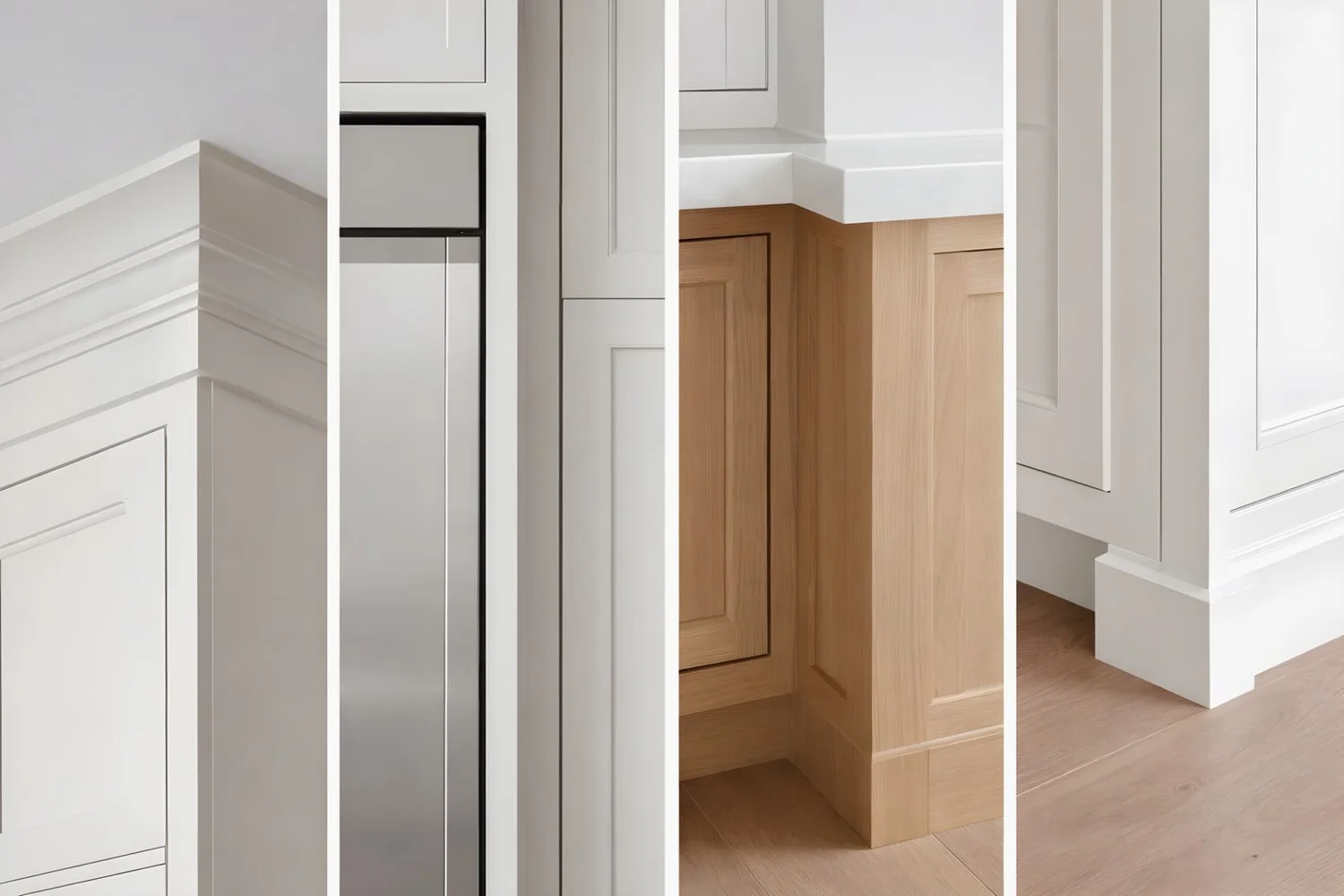
Transition Planning
Fillers, panels, scribes, mouldings, and reveals connect manufactured cabinet sizes to real room conditions.
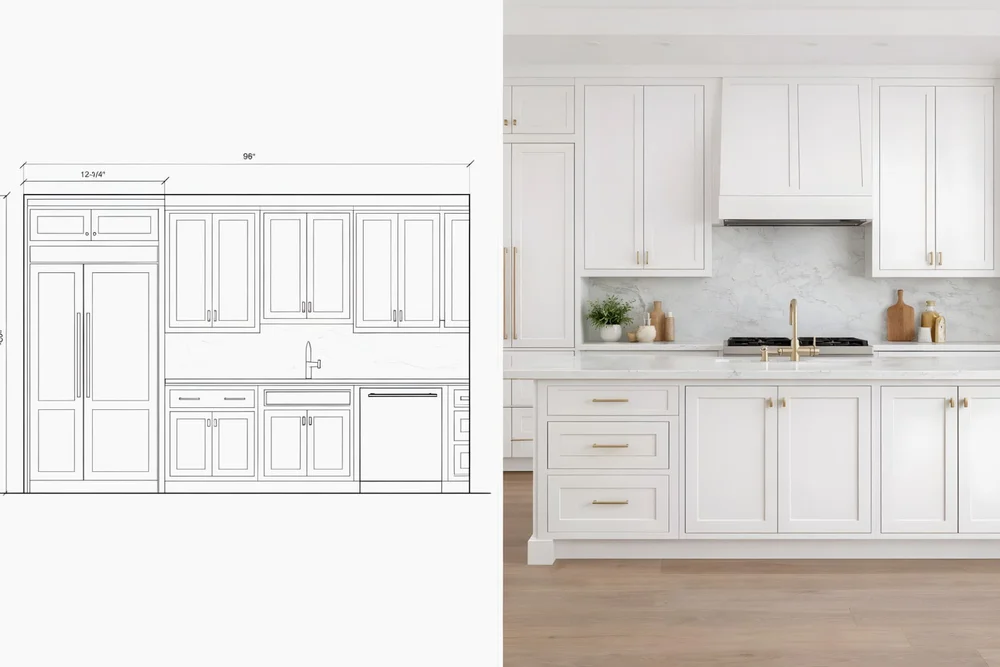
Elevation Planning
Cabinet elevations reveal alignment problems and special transition components before they become installation problems.
Questions to Answer Before Ordering
- How will the upper cabinets meet the ceiling?
- Where do wall conditions require fillers or scribe material?
- Can every door, drawer, appliance, and handle open fully?
- Are visible appliance openings and cabinet runs balanced?
- Which exposed sides require finished or decorative panels?
- How will countertops terminate at tall cabinets and walls?
- Where will toe kicks return at exposed ends?
- Do crown, light rail, panels, and trim fit the final elevations?
Design the Finish Before Ordering the Cabinets
- Measure the Room
Document walls, ceilings, openings, appliances, utilities, and floor conditions. - Build the Layout
Place cabinets around function, clearances, storage, and architectural relationships. - Review Elevations
Coordinate symmetry, fillers, panels, mouldings, appliance openings, and run endings. - Verify the Order
Confirm sizes, quantities, finished sides, trim, accessories, and compatibility.
Explore the Details That Finish the Room
Custom-Looking Kitchen FAQs
Do cabinets need to reach the ceiling to look custom?
No. Full-height cabinetry is one option, but a deliberate reveal, crown, fascia, riser, or scribed trim can also create a finished ceiling transition.
Why do kitchen cabinets need filler panels?
Fillers accommodate irregular walls, protect operating clearances, balance spacing, and help cabinet runs terminate cleanly.
What makes an exposed cabinet end look finished?
A coordinated finished side or decorative end panel gives the exposed surface intentional depth and detail instead of leaving it looking like the side of a box.
Can RTA cabinets produce a built-in appearance?
Yes. RTA cabinetry can look highly integrated when the layout includes the correct fillers, panels, trim, appliance clearances, alignment, and installation planning.
Why should cabinet elevations be reviewed before ordering?
Elevations reveal vertical and horizontal relationships that a floor plan alone may not show, including crown transitions, appliance alignment, finished ends, cabinet heights, and trim requirements.
Plan the Details Before the Cabinets Arrive
MDI provides cabinetry design, layout guidance, and order review for custom projects in Florida and RTA cabinet orders nationwide.
