

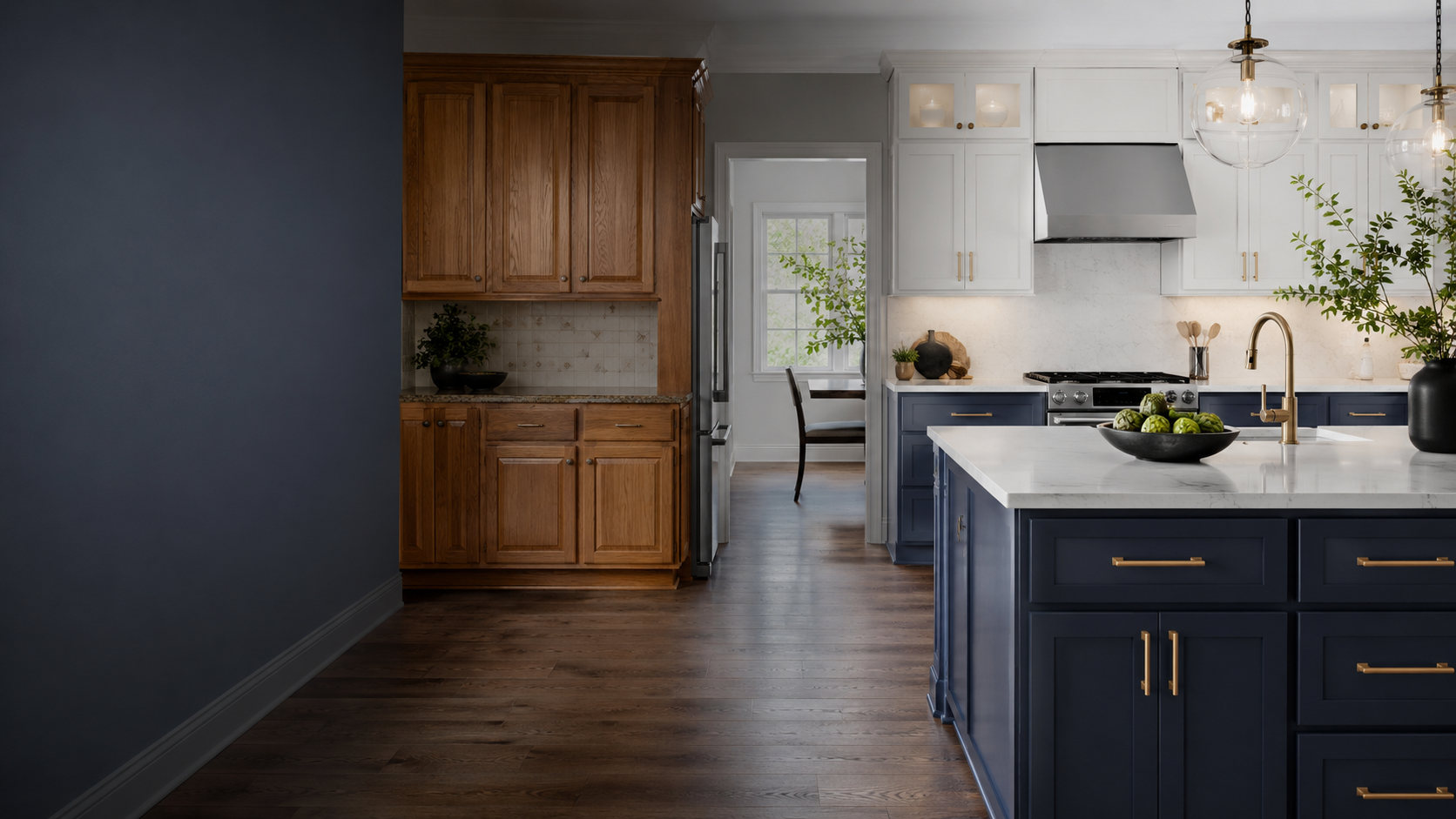
An Honest Cabinet Decision Guide
Cabinet Refacing vs. New Cabinets
Refacing can refresh a sound cabinet system. Replacement provides new boxes, drawers, hardware, storage, and the opportunity to correct the layout. The right choice starts with what is behind the doors—not just how the kitchen looks today.
First, Define the Work
Refacing Changes the Exterior. Replacement Changes the Cabinet System.
A fair comparison must include the complete scope of each option. Painting existing doors is not the same as professional refacing, and replacing doors is not the same as replacing the cabinets.
Cabinet Refacing
The existing cabinet boxes remain in place. New doors and drawer fronts are installed, while visible frames and exposed ends are covered or refinished to coordinate.
- Preserves the current layout and cabinet openings
- Usually preserves the existing interiors
- May include new hinges, pulls, and selected drawer hardware
- Requires sound, square, dry cabinet boxes
New Cabinet Replacement
The existing cabinet system is removed and replaced with new boxes, doors, drawers, shelves, and hardware selected for the project.
- Allows layout, storage, and appliance-clearance changes
- Replaces worn interiors and structural components
- Provides coordinated new doors, drawers, hinges, and slides
- Can use RTA, semi-custom, or custom cabinetry
Side-by-Side
What Each Option Can—and Cannot—Change
When Refacing Works
Refacing Makes Sense Only When the Foundation Is Worth Keeping
Boxes Are Sound
No swelling, delamination, water damage, broken joints, sagging shelves, or loose mounting.
The Layout Works
Appliances, work zones, cabinet sizes, clearances, and traffic flow already serve the household.
Storage Is Adequate
The current drawer count, cabinet openings, corner access, pantry capacity, and usable interior space are acceptable.
Surfaces Can Be Prepared
Frames and exposed ends are stable, clean, and compatible with the intended veneer or finish process.
Hardware Can Be Updated
Hinge locations, overlays, drawer openings, and cabinet construction support the planned components.
The Scope Is Truly Cosmetic
The goal is a different door style or color—not a new layout, new cabinet system, or major functional correction.
When Replacement Is Smarter
Do Not Put a New Exterior Over a Failing or Frustrating Cabinet System
- Water damage, swelling, delamination, odors, mold concerns, or pest damage
- Loose boxes, broken joints, sagging shelves, or worn interiors
- A layout that wastes space or conflicts with new appliances
- Too few drawers, poor corner access, or inadequate pantry storage
- Outdated drawer systems or hardware requiring extensive correction
- A desired door overlay or design that does not suit the existing boxes
- Refacing, repairs, accessories, and labor approaching the cost of replacement
Compare the Complete Price
Refacing Is Not Automatically the Lower-Cost Choice
The meaningful number is the finished project total. A refacing proposal may include—or omit—door and drawer fronts, veneer or skins, end panels, crown, toe-kick material, hinges, slides, pulls, repairs, disposal, countertop protection, and labor. A replacement proposal may include cabinets but exclude freight, assembly, trim, installation, countertops, plumbing, or electrical work.
Ask a Refacing Contractor
- Exactly which surfaces will be covered or refinished?
- Are cabinet interiors and drawer boxes unchanged?
- What repairs are included if damage is discovered?
- Are new hinges, slides, panels, trim, and hardware included?
- What finish and workmanship warranties apply?
Ask a Cabinet Supplier
- What are the box, back, shelf, drawer, and hardware specifications?
- Which fillers, skins, panels, moldings, and accessories are required?
- Who verifies measurements, appliance clearances, and the final order?
- What are the freight, inspection, claim, return, and warranty terms?
- Who handles assembly and installation?
The MDI Buying Paths
Choose New Cabinetry That Fits the Project
MDI Luxury Cabinetry offers RTA cabinet collections for nationwide ordering and custom cabinetry services for Florida projects. Cabinet installation may be DIY, completed by a qualified contractor of your choice, or coordinated separately where available.
Nationwide RTA Cabinetry
Explore cabinet collections, sizes, finishes, storage components, and accessories for projects suited to an available cabinet line.
Order cabinets online →Florida Custom Cabinetry
Consider custom cabinetry when the project requires specialized dimensions, detailed design development, integrated millwork, or a highly tailored layout.
Explore custom kitchen cabinetry →Common Questions
Cabinet Refacing vs. Replacement FAQ
Is cabinet refacing always cheaper than new cabinets?
No. Cost depends on cabinet condition, door and finish choices, hardware, repairs, panels, trim, labor, delivery, and installation. Compare complete written scopes rather than headline prices.
Can damaged cabinet boxes be refaced?
Cosmetic refacing does not correct structural damage. Water-damaged, swollen, delaminated, loose, or badly worn boxes should be professionally evaluated before any new exterior is applied.
Can refacing change the kitchen layout?
Not substantially. Refacing preserves the existing cabinet boxes and openings. Moving appliances, changing cabinet widths, improving corners, or creating new storage usually points toward replacement or custom cabinetry.
Can soft-close hardware be added during refacing?
Sometimes. Compatibility depends on the existing cabinet construction, door overlay, hinge locations, drawer boxes, openings, and clearances. The exact hardware must be verified.
Before You Reface, Price the Cabinet System You Actually Want
Compare the condition of your existing boxes, the limitations of the current layout, and the complete project cost—then explore MDI cabinet collections built for a full kitchen update.