

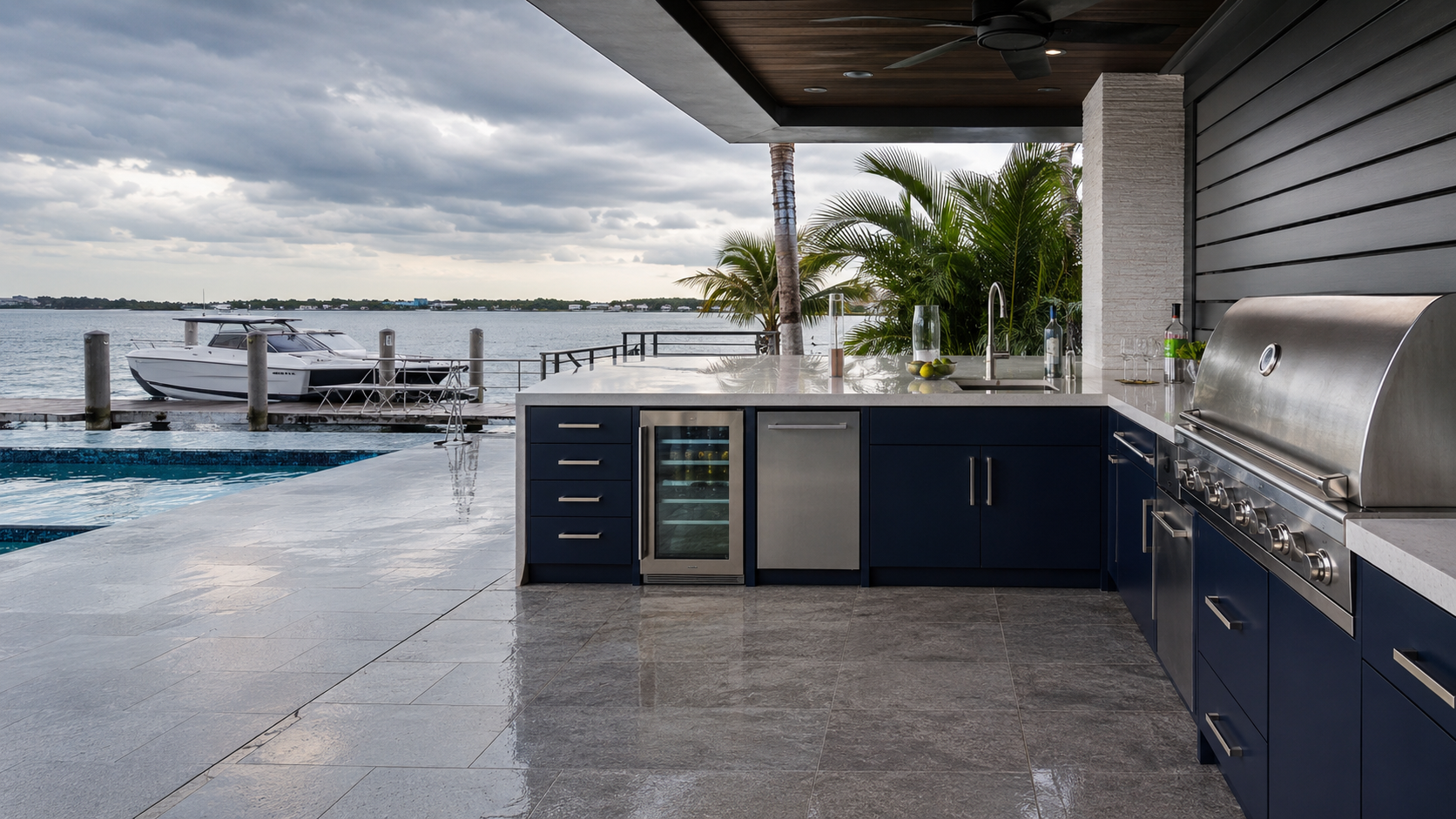
Outdoor • Waterfront • Weather-Exposed Cabinetry
Marine-Resistant Cabinet Materials
Marine-grade cabinetry is built for demanding environments such as outdoor kitchens, pool bars, waterfront entertaining areas, docks, boats, and other spaces exposed to rain, salt air, sun, humidity, and temperature changes.
Built for Exposure
Indoor Cabinet Materials Are Not Outdoor Materials
Ordinary cabinetry is designed for conditioned rooms. Marine and exterior applications require substrates, hardware, fasteners, adhesives, finishes, ventilation, and installation details selected for direct weather and salt exposure. The entire assembly must work together.
Outdoor Kitchens
Cabinetry must tolerate water, heat, ultraviolet exposure, cleaning, and integration with grills, refrigerators, sinks, and ventilation.
Pool and Waterfront Bars
Splash exposure, chlorine, salt air, and uncovered surfaces demand nonabsorbent materials and corrosion-conscious hardware.
Boats and Docks
Marine installations add vibration, confined spaces, constant humidity, saltwater exposure, weight limits, and secure-latching requirements.
Material Comparison
Materials Used for Marine and Exterior Cabinetry
The correct specification depends on direct exposure, heat, structural requirements, weight, appearance, fabrication, and budget.
| Material | Why It Is Used | Important Considerations | Common Applications |
|---|---|---|---|
| Marine-grade HDPE / polymer | Nonporous, rot-resistant, easy to clean, and unaffected by ordinary water absorption. | Requires correct thickness, reinforcement, fastening, expansion allowances, and heat clearance. | Outdoor kitchens, pool bars, dock cabinets, boat storage, and wet areas. |
| Exterior PVC sheet | Water-resistant, lightweight, machinable, and available in multiple finishes. | Structural support, screw holding, thermal movement, and heat exposure must be addressed. | Covered exterior cabinets, wet compartments, and lightweight installations. |
| Powder-coated aluminum | Strong, lightweight, noncombustible, and corrosion-resistant. | Coating quality, alloy, fabrication, dissimilar metals, and coastal maintenance matter. | Grill cabinets, rooftop bars, outdoor kitchens, and commercial installations. |
| 316 stainless steel | High strength, heat resistance, cleanability, and strong saltwater corrosion resistance. | Correct grade and fabrication matter; even 316 benefits from freshwater cleaning. | Hardware, fasteners, hinges, latches, boat galleys, and exposed kitchens. |
| Marine-grade plywood | High-quality veneers, limited core voids, and durable waterproof adhesive. | Not rot-proof or maintenance-free; faces, edges, penetrations, and fasteners must be sealed. | Boat interiors, protected bars, specialty millwork, and structural wood applications. |
| Compact laminate | Dense, durable, low-absorption panels with finished faces. | Confirm manufacturer-approved exterior use, fastening, edge details, and heat limitations. | Outdoor fronts, doors, wet-area panels, partitions, and commercial bars. |
Specify the Whole Assembly
Details That Determine Performance
Cabinet Construction
- Nonabsorbent or properly sealed cabinet bodies and fronts
- Protected edges, seams, penetrations, and fastening points
- Reinforcement for stone tops, grills, appliances, and long spans
- Manufacturer-required ventilation and heat clearances
- Drainage paths that prevent trapped water
- Secure latches where wind or vessel movement requires them
Hardware and Installation
- 316 stainless or application-appropriate corrosion-resistant hardware
- Fasteners compatible with cabinet materials and nearby metals
- Isolation of dissimilar metals to limit galvanic corrosion
- Anchorage designed for substrate, wind, vibration, and weight
- Raised or detailed bases that avoid standing water
- Routine rinsing and maintenance in direct saltwater environments
Select by Environment
Exposure Changes the Specification
Covered Exterior
Protected locations still experience humidity, condensation, wind-driven rain, insects, and temperature changes.
Direct Weather
Uncovered installations need materials intended for ultraviolet exposure, repeated wetting, drainage, and outdoor temperature swings.
Saltwater and Marine
Waterfront and vessel applications require extra attention to chloride corrosion, vibration, weight, cleaning access, and sealed penetrations.
Planning Questions
Information Needed Before Selection
Where Will It Be Used?
- Boat cabin, cockpit, dock, pool deck, patio, bar, or rooftop
- Covered, partially covered, or fully exposed
- Freshwater, brackish water, salt air, or direct saltwater
- Residential, commercial, hospitality, or vessel application
What Must It Support?
- Grill, sink, refrigerator, ice maker, drawers, or storage
- Stone, porcelain, stainless, or lightweight countertop
- Plumbing, electrical, gas, ventilation, and drainage
- Wind, movement, vibration, heat, and cleaning chemicals
For conditioned interior kitchens, compare our cabinet collections or read the cabinet construction guide. Marine and exterior cabinetry requires a separate material review.
Frequently Asked Questions
Marine-Grade Cabinet Questions
What is the best material for outdoor kitchen cabinets?
Marine-grade HDPE/polymer, properly engineered aluminum, stainless steel, exterior-rated PVC, and certain compact laminates are common choices. The best material depends on heat, sun, rain, salt exposure, span, appearance, and appliances.
Is marine-grade plywood waterproof?
No. It uses high-quality veneers and durable waterproof adhesive, but the wood itself can absorb moisture. Faces, edges, penetrations, and fastener locations must be sealed and maintained.
What stainless steel is best near saltwater?
316 stainless generally provides better chloride resistance than 304 stainless. Even 316 benefits from regular freshwater rinsing and cleaning.
Can indoor cabinets be installed under a covered patio?
Coverage reduces exposure but does not create a conditioned interior. Humidity, condensation, wind-driven rain, heat, insects, and temperature changes can damage ordinary indoor cabinetry.
Can marine-grade cabinetry be used for boats and commercial bars?
Yes, when materials, fasteners, latches, sanitation, weight, structural support, vibration, heat, and applicable requirements are designed for the specific use.
Plan Cabinetry Around the Exposure
Tell MDI where the cabinetry will be installed, whether it is covered, how close it is to saltwater, and which appliances or fixtures it must support.