

Cabinet Quality Guide
Cabinet Construction Explained
Good cabinetry is more than a door style. Learn how cabinet boxes, drawer joinery, hardware, and assembly affect strength, function, and long-term value.
Four Quality Indicators
What to Examine Before Buying Cabinets
Finishes create the first impression, but these construction details determine how cabinetry handles daily use.
Cabinet Box
Material, thickness, back construction, and joinery determine the cabinet’s structural foundation.
Drawer Box
Strong corner joinery and a substantial drawer bottom improve load capacity and service life.
Hinges & Slides
Quality soft-close hardware supports smooth movement, alignment, and controlled closing.
Assembly
Accurate joinery and proper assembly help cabinets install square and remain aligned.
Boxes & Drawers
The Parts That Carry the Load
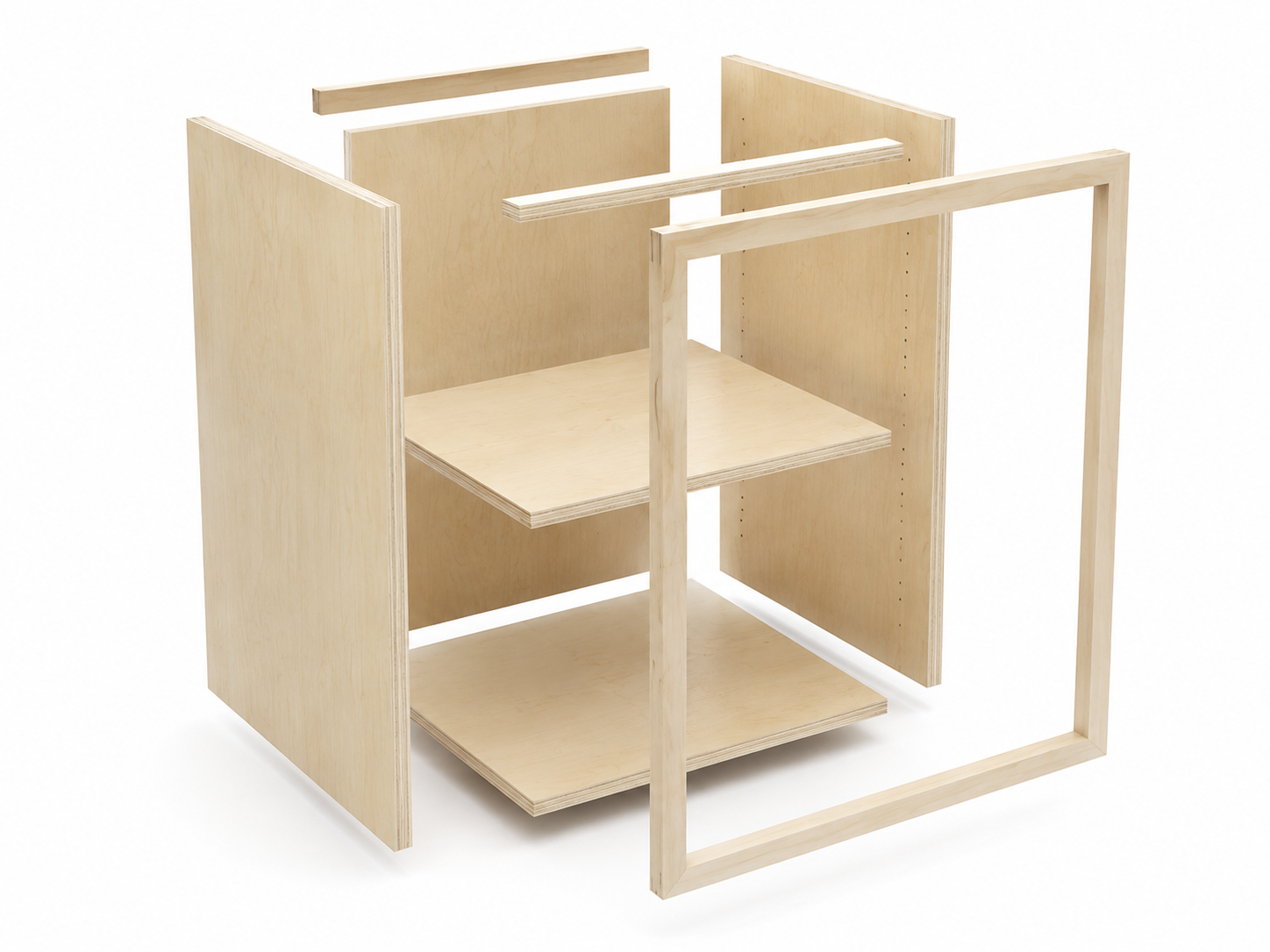
Cabinet Box Construction
The box supports shelves, drawers, hardware, countertops, and stored contents. Plywood is frequently used in performance-focused cabinetry because its bonded veneer layers provide strength, stability, and reliable fastener retention.
- Check the side, back, shelf, and bottom materials.
- Compare panel thickness—not simply the word “plywood.”
- Look for square joinery and secure connections.
Dovetail Drawer Construction
Dovetail joinery mechanically interlocks the drawer sides instead of relying only on staples or fasteners. Properly made dovetail drawers resist separation through repeated opening, closing, and loading.
- Inspect all four drawer-box corners.
- Check the drawer-bottom thickness and support.
- Confirm the slides match the intended load.
Hardware & Installation
A Practical Cabinet-Quality Checklist
Common Questions
Cabinet Construction FAQ
What is the strongest cabinet-box material?
Quality plywood is widely chosen for cabinet boxes because it combines strength, stability, and good fastener retention. Performance still depends on thickness, veneer quality, joinery, and the complete cabinet specification.
Are dovetail drawers always better?
Well-made dovetail joinery is a strong indicator of drawer-box quality, but drawer-bottom construction, slide quality, assembly, and load rating also matter.
Do soft-close hinges make cabinets higher quality?
Soft-close hardware improves operation and reduces impact, but the hinge or slide itself must also be properly rated, installed, and adjustable.
Compare More Than the Door Style
Explore cabinet collections from MDI Luxury Cabinetry or continue through our buying guide before placing your order.