

Slim Shaker vs Traditional Shaker Cabinets: What’s the Difference?

Slim Shaker and standard Shaker cabinets share the same framed, recessed-panel foundation. The primary difference is proportion: slim Shaker doors use a much narrower frame, while standard Shaker doors use wider rails and stiles for a more substantial appearance.
The Difference at a Glance
Choose slim Shaker when you want lighter visual weight, narrow architectural lines, and a more contemporary cabinet face. Choose standard Shaker when you want a familiar, balanced profile that works easily with transitional, coastal, farmhouse, and traditional interiors.
The choice changes the appearance of the kitchen—not the basic function of the cabinetry.
| Design Detail | Slim Shaker | Standard Shaker |
|---|---|---|
| Frame proportion | Ultra-narrow rails and stiles | Wider, more traditional rails and stiles |
| Visual weight | Lighter and more streamlined | More substantial and familiar |
| Overall character | Modern, architectural, minimalist | Timeless, transitional, versatile |
| Best pairing | Simple hardware and restrained trim | Minimal or more detailed hardware and trim |
| Door construction | Framed door with recessed center panel | Framed door with recessed center panel |
| MDI option | 3/4-inch Slim Shaker Collection | Compare standard Shaker collections |
Slim Shaker and Standard Shaker Up Close
Looking at the door face—not just the entire room—makes the proportion difference much easier to understand.

Standard Shaker
Wider rails and stiles give the doors a stronger framed appearance. The profile feels established, balanced, and adaptable across many home styles.
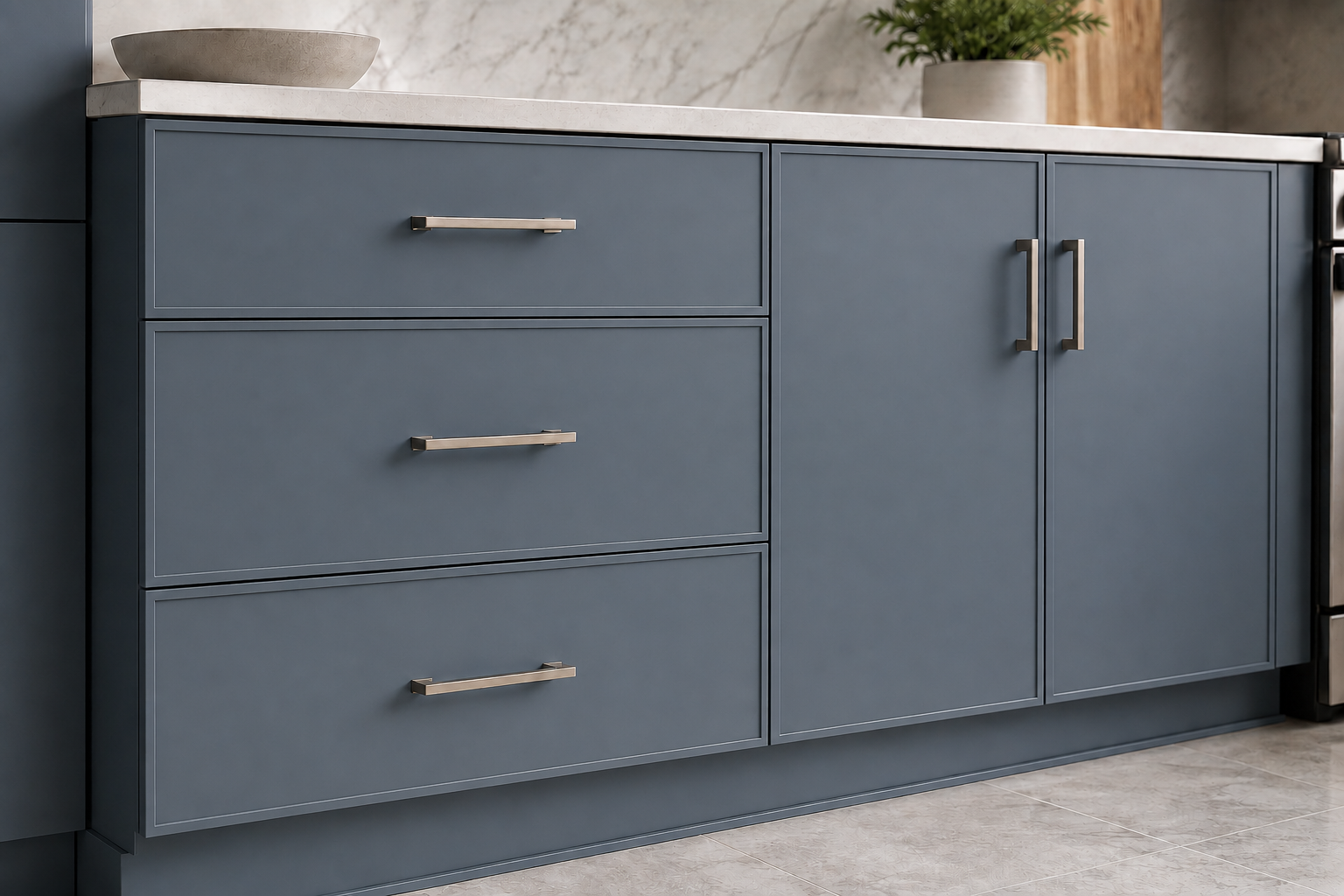
MDI Slim Shaker
The narrow 3/4-inch face profile retains the recessed-panel Shaker character while creating cleaner, lighter lines. It is full overlay—not inset and not a routed slab door.
What Both Shaker Styles Have in Common
- A framed cabinet-door appearance
- A flat recessed center panel
- Clean geometry without heavy ornamentation
- Compatibility with kitchens, vanities, bars, and storage
Which Shaker Style Should You Choose?
Choose Slim Shaker If…
You prefer a modern cabinet face, want the doors to feel visually lighter, or are coordinating the cabinetry with streamlined hardware, large-format surfaces, and restrained architectural details.
Choose Standard Shaker If…
You want a proven profile with more visible framing, need flexibility across traditional and contemporary elements, or prefer cabinetry that carries a little more visual weight.
Room size alone does not make the decision. Finish, hardware scale, crown moulding, light rail, appliance panels, and the proportions of surrounding millwork all affect the final result. For a broader profile breakdown, visit our complete Shaker cabinet styles guide.
Explore MDI Shaker Cabinet Collections
Compare the available profiles, finishes, and cabinet configurations before selecting a collection.
Slim Shaker vs Standard Shaker FAQs
Are slim Shaker cabinets still Shaker cabinets?
Yes. Slim Shaker doors retain the framed appearance and recessed center associated with Shaker design, but use narrower rails and stiles for a more contemporary proportion.
Are MDI Slim Shaker cabinets slab or inset?
No. MDI Slim Shaker cabinetry uses a full-overlay door style with a recessed center and a narrow 3/4-inch face profile. It is not inset cabinetry and it is not a slab door with a decorative groove.
Do slim Shaker cabinets work in small kitchens?
Yes. Their reduced visual weight can help a compact kitchen feel cleaner, but finish, lighting, layout, and hardware also influence how open the room appears.
Is standard Shaker cabinetry outdated?
No. Standard Shaker proportions remain adaptable because they work with modern, transitional, coastal, farmhouse, and traditional design elements.
Can MDI help compare styles before ordering?
Yes. MDI can review the cabinet layout, collection, finish, and project requirements before an order is finalized.
Compare the Cabinetry Before You Order
Explore every collection or send MDI your measurements and project details for layout and ordering guidance.
