

Cabinet Construction Guide
Plywood Cabinet Boxes Explained
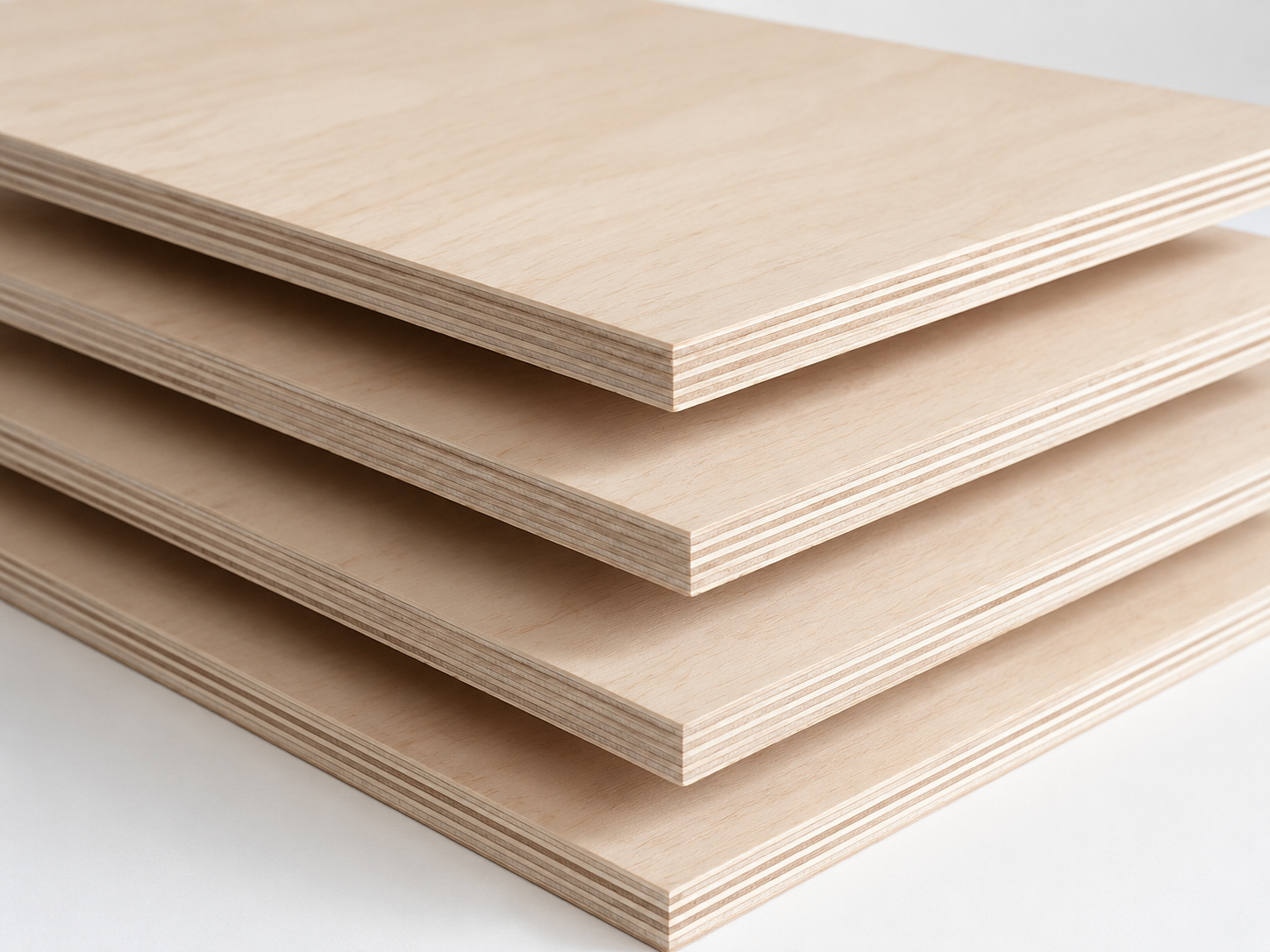
Plywood cabinet boxes use multiple bonded wood-veneer layers to create a strong, stable cabinet structure. Here is what plywood changes—and what to compare before buying kitchen or bathroom cabinetry.
Why Box Material Matters
The Cabinet Box Is the Structural Foundation
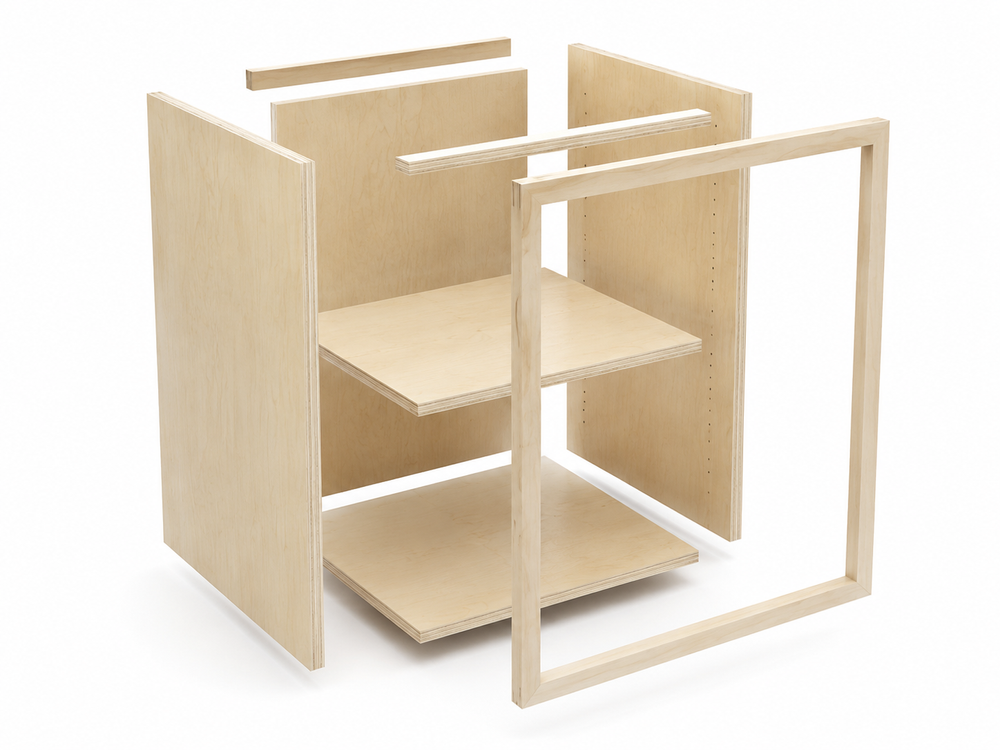
Doors create the style, but the box supports shelves, drawers, hardware, countertops, and years of daily use. Plywood is commonly selected for better-quality cabinetry because its cross-laminated layers resist movement and hold fasteners securely.
Structural Strength
Layered veneers help the cabinet remain square under countertop and storage loads.
Fastener Retention
Plywood provides dependable holding power for hinges, slides, and cabinet joinery.
Moisture Tolerance
It generally resists swelling better than standard particleboard when exposed to minor household moisture.
Long-Term Stability
Quality plywood is less prone to sagging, crumbling, and edge failure during normal residential use.
Quick Comparison
Plywood vs. Particleboard Cabinet Boxes
Common Questions
Plywood Cabinet Box FAQ
Are plywood cabinet boxes waterproof?
No. Plywood generally tolerates minor moisture better than standard particleboard, but leaks should still be repaired promptly and cabinet interiors should be dried.
Does plywood mean the cabinet doors are solid wood?
No. Cabinet-box material and door material are separate specifications. Doors may use hardwood, HDF, MDF, plywood panels, or combinations depending on the collection.
Are plywood cabinets worth it?
For kitchens, bathrooms, rentals, and other frequently used spaces, plywood construction can provide worthwhile strength, hardware retention, and long-term stability.
Compare Cabinet Construction Before You Order
Explore MDI Luxury Cabinetry collections, review available construction specifications, or continue through our cabinet buying guide.