

Cabinetry Guides & Expert Resources
Better Information.
Better Cabinet Decisions.
Practical guidance on cabinet construction, door styles, layouts, ordering, installation realities, custom design, and the details that determine how a finished kitchen performs.
Experience-Based Cabinetry Education
Answers Grounded in How Cabinets Are Actually Built and Installed.
Cabinet decisions affect far more than color. Box construction, door profiles, overlays, fillers, panels, hardware, appliance clearances, room conditions, freight, assembly, and installation all influence the final result.
MDI's resource center helps homeowners compare options, understand specifications, prepare better layouts, and approach online cabinet ordering with fewer surprises.
Start With These Guides
Featured Cabinetry Resources.
These articles answer the questions customers most often face before selecting a collection, approving a layout, or placing an order.
Slim Shaker vs. Traditional Shaker
Compare rail widths, visual weight, design character, and the rooms where each shaker profile works best.
Read the Comparison → Technical SpecificationsHow Maui Cabinets Are Built
Review door construction, plywood cabinet boxes, full-overlay design, dovetail drawers, and undermount hardware.
Review Construction → Design DetailsWhy Some Kitchens Look Custom
Learn how proportions, fillers, panels, moldings, alignment, and transitions separate a designed kitchen from installed boxes.
See What Makes the Difference → Collection GuideChoose the Right Cabinet Collection
Compare style, construction, finish direction, flexibility, project needs, and the best route for your home.
Compare Collections → Online OrderingHow to Buy Cabinets Online
Understand measurements, design support, order review, freight delivery, assembly, and planning before purchase.
Read the Buying Guide → RTA CabinetsAre RTA Cabinets Worth It?
Evaluate quality, construction, value, shipping, assembly, installation, and when RTA cabinetry makes sense.
Explore the Answer →Ready to Move From Research to a Project?
Choose Your Next Step.
Shop Cabinet Collections
Compare Catalina, Slim Shaker, Maui, Simple Shaker, and Escada door styles and finishes.
Explore Collections →Get Layout & Design Help
Turn measurements and ideas into a coordinated cabinet plan before ordering.
Explore 3D Design →Discuss a Custom Project
Plan custom kitchens, closets, vanities, built-ins, and qualifying Florida cabinetry projects.
Contact MDI →Complete Evergreen Article Directory
Browse All 80 Cabinetry Articles.
Every current MDI cabinetry article is linked below so visitors and search engines can reach the complete resource library without depending on pagination or search.
Open the Complete Article Directory
Latest Cabinetry Articles
Continue Into the Full MDI Resource Library.
The live Squarespace blog feed begins directly below this section, with the newest articles first.
↓Find the Cabinetry Answer You Need.
Search all 81 MDI articles or browse by topic. These guides cover cabinet construction, online ordering, custom design, installation, closets, vanities, local projects and the details that shape a successful result.
Featured Guides & New Releases
9 featured articlesBuying Cabinets & RTA Guides
Online ordering and product selectionCabinet Doors, Materials & Construction
Profiles, hardware and technical detailsKitchen Design & Inspiration
Layouts, finishes and architectural ideasCustom Closets & Storage
Organization and built-in storageBathroom Vanities
Vanity design and bathroom storageLocal & Custom Cabinetry
Pinellas County projects and investment guidesProject Planning & Industry Knowledge
Costs, responsibilities and planning realitiesTry a broader term such as “cabinets,” “doors,” “closets,” “installation” or “RTA.”
Ready to Move from Research to a Cabinet Plan?
Send MDI your measurements, appliance information and project goals. Our design team can help you compare collections, review the layout and determine the right cabinetry path.

12 Cabinet Hardware Ideas That Look Professionally Designed
Cabinet hardware influences how cabinetry looks, feels, and functions every day. The right pulls should relate to the cabinet profile, drawer width, finish palette, appliances, plumbing fixtures, and architecture without making the kitchen look overdecorated. These twelve cabinet hardware ideas focus on choices that remain refined after short-lived trends disappear.

Cabinet hardware influences how cabinetry looks, feels, and functions every day. The right pulls should relate to the cabinet profile, drawer width, finish palette, appliances, plumbing fixtures, and architecture without making the kitchen look overdecorated. These twelve cabinet hardware ideas focus on choices that remain refined after short-lived trends disappear.
Hardware With a Purpose
Cabinet Hardware Is Part of the Cabinet Design
Hardware is often selected late in a project, but it affects the entire cabinet elevation. Pull shape changes how the eye reads doors and drawers, while finish and scale influence whether the cabinetry appears quiet, traditional, contemporary, or unnecessarily busy.
A successful hardware plan answers four questions before drilling begins:
- Which pull profile fits the door style?
- Which finish supports the room palette?
- Which sizes fit each cabinet proportion?
- Where will every pull be installed?
Twelve Professional Ideas
12 Cabinet Hardware Ideas That Look Intentionally Designed
Use a Clean Square Bar Pull
A square bar pull has enough structure to complement Shaker cabinetry while remaining simple enough for kitchens, vanities, offices, bars, and built-ins.
Scale Pulls to Drawer Width
A small pull can look lost on a wide drawer. Use longer versions of the same hardware family to maintain comfortable operation and better visual proportion.
Keep One Hardware Profile
Using the same pull design in several lengths creates more order than mixing unrelated handles, knobs, cups, and decorative pieces throughout one room.
Add Warmth With Aged Brass
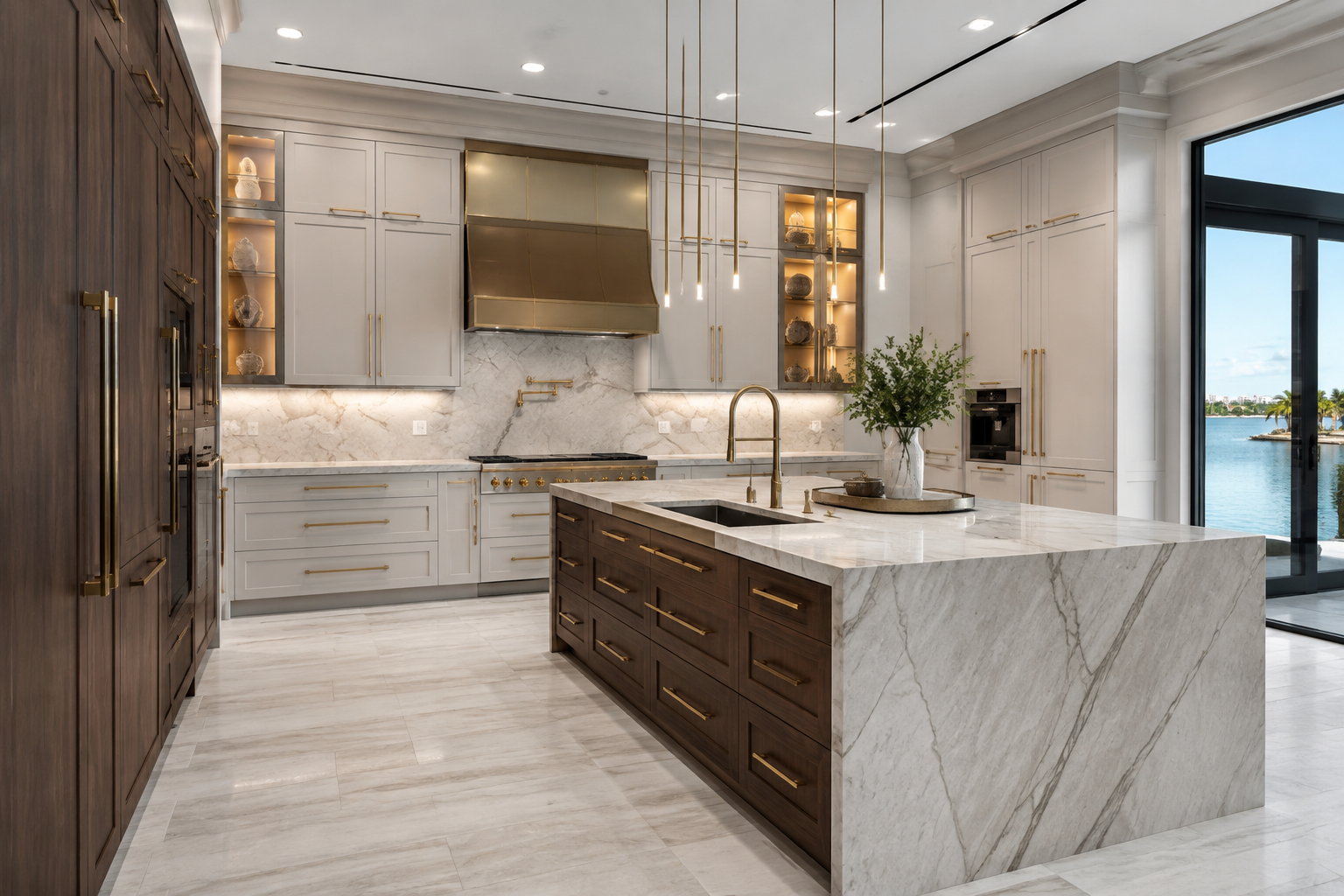
Aged or brushed brass introduces restrained warmth against white, blue, green, black, and natural-wood cabinetry without the glare of highly polished gold.
Create Contrast With Matte Black
Matte-black pulls produce a sharp architectural line on pale cabinetry and can coordinate with windows, lighting, plumbing fixtures, and rail systems.
Use Polished Nickel for a Refined Finish
Polished nickel provides a warmer, more layered appearance than bright chrome and works well in transitional kitchens and bathrooms.
Mix Metals With a Clear Hierarchy
Choose one dominant metal and use another as a controlled accent. Hardware, plumbing, lighting, and appliances do not need identical finishes, but they should relate intentionally.
Use Appliance Pulls Where Appropriate
Integrated refrigerator and dishwasher panels require substantial appliance-rated pulls. Standard cabinet pulls should not be stretched into roles they were not designed to perform.
Mount Door Pulls Vertically
Vertical placement on the outer door stile creates a natural grip and reinforces the door’s proportion. Keep the pull centered within the rail rather than floating near the panel.
Mount Drawer Pulls Horizontally
A horizontal pull centered on the drawer’s top rail follows the direction of movement and creates consistent alignment across the base-cabinet elevation.
Use Longer Pulls on Tall Doors
Pantry and linen doors can support a longer version of the same pull family. The larger size should reflect the door’s scale without becoming an oversized appliance handle.
Mock Up Placement Before Drilling
Temporary adhesive, a drilling template, or a sample door allows the hardware position and length to be evaluated before permanent holes are made.
Hardware Finishes
Choose the Finish in the Actual Room
Digital images can make brass appear yellow, black appear flat, and nickel resemble chrome. Review physical samples beside the cabinet finish, countertop, backsplash, plumbing fixtures, appliances, and flooring under the room’s natural and artificial light.
| Hardware Finish | Works Especially Well With | Design Effect |
|---|---|---|
| Aged or brushed brass | White, navy, green, black and natural oak | Warm, tailored and quietly luxurious |
| Matte black | White, pale oak, warm neutrals and colored cabinetry | Crisp architectural contrast |
| Polished nickel | White, gray, blue and transitional interiors | Refined reflectivity with a warmer undertone |
| Satin nickel | Stainless appliances and restrained neutral palettes | Quiet, practical and familiar |
| Satin bronze | Natural wood, warm stone and layered earth tones | Subtle warmth with less brightness than brass |
Correct Scale
How Long Should Cabinet Pulls Be?
There is no single pull length that belongs on every cabinet. Drawer width, door height, rail dimensions, grip comfort, and the overall hardware family should determine the selection.
Standard Doors
Use a pull that fits comfortably within the door stile and leaves enough surrounding material for a balanced appearance.
Wide Drawers
Choose a longer version of the same pull rather than using two small pulls unless the cabinet design specifically calls for paired hardware.
Tall Pantry Doors
A longer pull can improve scale and reach while maintaining the same profile used throughout the kitchen.
Appliance Panels
Use hardware designed for the weight and operating force of the appliance rather than ordinary decorative cabinet hardware.
The center-to-center measurement—the distance between mounting screws—must also be confirmed. Overall pull length and center-to-center size are not the same measurement.
Placement Matters
Where Cabinet Pulls Should Be Installed
Good hardware can look wrong when installed inconsistently. Placement should follow the cabinet profile and be repeated throughout the elevation.
- One pull on every operable door
- One pull on every operable drawer
- No hardware on fixed decorative panels
- Vertical pulls on door stiles
- Horizontal pulls on drawer rails
- Consistent distance from door edges
- Aligned hardware across drawer banks
- Accessible and comfortable grip locations
Shaker Cabinetry
Hardware for Slim Shaker and Traditional Shaker Doors
Traditional Shaker doors can support a range of pull profiles because their wider rails create a larger mounting area. Slim Shaker cabinetry requires more discipline. Narrow rails look best with clean, proportionate pulls and carefully planned screw locations.
A pull that is too bulky can visually overwhelm a narrow frame. A pull that is too small can look accidental. The hardware should reinforce the slim profile rather than compete with it.
Explore MDI’s Slim Shaker cabinetry and compare additional styles in our cabinet collections.
Mixed Metals
Cabinet Hardware Does Not Need to Match Every Fixture
A kitchen can successfully combine brass cabinet pulls, a black range, stainless appliances, and a polished-nickel faucet when the finishes are distributed intentionally. Problems begin when every item introduces another unrelated metal without repetition or hierarchy.
Choose a Dominant Finish
Let one metal lead the cabinet elevation and appear consistently across doors and drawers.
Repeat the Accent
If a second metal is introduced, repeat it in at least one additional element so it does not appear accidental.
Consider Undertones
Warm brass and bronze relate differently to stone and wood than cooler chrome, black, or stainless finishes.
Limit the Competition
Hardware should support major cabinetry and stone selections rather than becoming the loudest material in the room.
Before Drilling
Confirm the Hardware Plan Before Installation
Once a cabinet front is drilled, changing to another center-to-center size can require replacing or repairing the door or drawer front. Finalize the hardware family, sizes, finish, quantities, and placement before installation begins.
- Count every operable door and drawer
- Separate standard and appliance pulls
- Confirm all center-to-center dimensions
- Inspect finish consistency upon delivery
- Test the grip with actual hands
- Approve placement on a sample front
- Use a stable drilling template
- Keep spare pulls for future replacement
Frequently Asked Questions
Cabinet Hardware Questions
Are pulls or knobs better for kitchen cabinets?
Pulls generally provide a more substantial grip, work well on both doors and drawers, and allow one consistent hardware profile to be used throughout the kitchen.
Should every cabinet pull be the same size?
No. Using the same pull design in several coordinated lengths usually creates better proportions across standard doors, wide drawers, tall pantry doors, and appliance panels.
Can brass and black hardware be mixed?
Yes, but one finish should remain dominant. The secondary finish should be repeated intentionally in lighting, plumbing, appliances, windows, or another architectural element.
Where should pulls be placed on Shaker cabinet doors?
Door pulls are generally mounted vertically on the outer stile near the opening edge. The exact position should be consistent and coordinated with the width of the Shaker rail.
Where should pulls be placed on Shaker drawer fronts?
Drawer pulls are generally installed horizontally and centered on the upper rail, with consistent alignment across neighboring drawer fronts.
Should fixed decorative panels have hardware?
No. Hardware should indicate an operable door or drawer. Adding pulls to fixed panels creates confusion and makes the cabinetry appear incorrectly installed.
Choose Hardware as Part of the Cabinet Design
MDI Luxury Cabinetry can help coordinate cabinet style, finish, hardware, panels, moldings, and surrounding materials before your cabinetry is ordered and installed.