

Cabinetry Guides & Expert Resources
Better Information.
Better Cabinet Decisions.
Practical guidance on cabinet construction, door styles, layouts, ordering, installation realities, custom design, and the details that determine how a finished kitchen performs.
Experience-Based Cabinetry Education
Answers Grounded in How Cabinets Are Actually Built and Installed.
Cabinet decisions affect far more than color. Box construction, door profiles, overlays, fillers, panels, hardware, appliance clearances, room conditions, freight, assembly, and installation all influence the final result.
MDI's resource center helps homeowners compare options, understand specifications, prepare better layouts, and approach online cabinet ordering with fewer surprises.
Start With These Guides
Featured Cabinetry Resources.
These articles answer the questions customers most often face before selecting a collection, approving a layout, or placing an order.
Slim Shaker vs. Traditional Shaker
Compare rail widths, visual weight, design character, and the rooms where each shaker profile works best.
Read the Comparison → Technical SpecificationsHow Maui Cabinets Are Built
Review door construction, plywood cabinet boxes, full-overlay design, dovetail drawers, and undermount hardware.
Review Construction → Design DetailsWhy Some Kitchens Look Custom
Learn how proportions, fillers, panels, moldings, alignment, and transitions separate a designed kitchen from installed boxes.
See What Makes the Difference → Collection GuideChoose the Right Cabinet Collection
Compare style, construction, finish direction, flexibility, project needs, and the best route for your home.
Compare Collections → Online OrderingHow to Buy Cabinets Online
Understand measurements, design support, order review, freight delivery, assembly, and planning before purchase.
Read the Buying Guide → RTA CabinetsAre RTA Cabinets Worth It?
Evaluate quality, construction, value, shipping, assembly, installation, and when RTA cabinetry makes sense.
Explore the Answer →Ready to Move From Research to a Project?
Choose Your Next Step.
Shop Cabinet Collections
Compare Catalina, Slim Shaker, Maui, Simple Shaker, and Escada door styles and finishes.
Explore Collections →Get Layout & Design Help
Turn measurements and ideas into a coordinated cabinet plan before ordering.
Explore 3D Design →Discuss a Custom Project
Plan custom kitchens, closets, vanities, built-ins, and qualifying Florida cabinetry projects.
Contact MDI →Complete Evergreen Article Directory
Browse All 80 Cabinetry Articles.
Every current MDI cabinetry article is linked below so visitors and search engines can reach the complete resource library without depending on pagination or search.
Open the Complete Article Directory
Latest Cabinetry Articles
Continue Into the Full MDI Resource Library.
The live Squarespace blog feed begins directly below this section, with the newest articles first.
↓Find the Cabinetry Answer You Need.
Search all 81 MDI articles or browse by topic. These guides cover cabinet construction, online ordering, custom design, installation, closets, vanities, local projects and the details that shape a successful result.
Featured Guides & New Releases
9 featured articlesBuying Cabinets & RTA Guides
Online ordering and product selectionCabinet Doors, Materials & Construction
Profiles, hardware and technical detailsKitchen Design & Inspiration
Layouts, finishes and architectural ideasCustom Closets & Storage
Organization and built-in storageBathroom Vanities
Vanity design and bathroom storageLocal & Custom Cabinetry
Pinellas County projects and investment guidesProject Planning & Industry Knowledge
Costs, responsibilities and planning realitiesTry a broader term such as “cabinets,” “doors,” “closets,” “installation” or “RTA.”
Ready to Move from Research to a Cabinet Plan?
Send MDI your measurements, appliance information and project goals. Our design team can help you compare collections, review the layout and determine the right cabinetry path.
Slim Shaker vs Traditional Shaker Cabinets: What’s the Difference?
Compare slim Shaker and standard Shaker cabinets, including rail width, visual weight, full-overlay construction, design style, and which profile best fits your kitchen.

Slim Shaker and standard Shaker cabinets share the same framed, recessed-panel foundation. The primary difference is proportion: slim Shaker doors use a much narrower frame, while standard Shaker doors use wider rails and stiles for a more substantial appearance.
The Difference at a Glance
Choose slim Shaker when you want lighter visual weight, narrow architectural lines, and a more contemporary cabinet face. Choose standard Shaker when you want a familiar, balanced profile that works easily with transitional, coastal, farmhouse, and traditional interiors.
The choice changes the appearance of the kitchen—not the basic function of the cabinetry.
| Design Detail | Slim Shaker | Standard Shaker |
|---|---|---|
| Frame proportion | Ultra-narrow rails and stiles | Wider, more traditional rails and stiles |
| Visual weight | Lighter and more streamlined | More substantial and familiar |
| Overall character | Modern, architectural, minimalist | Timeless, transitional, versatile |
| Best pairing | Simple hardware and restrained trim | Minimal or more detailed hardware and trim |
| Door construction | Framed door with recessed center panel | Framed door with recessed center panel |
| MDI option | 3/4-inch Slim Shaker Collection | Compare standard Shaker collections |
Slim Shaker and Standard Shaker Up Close
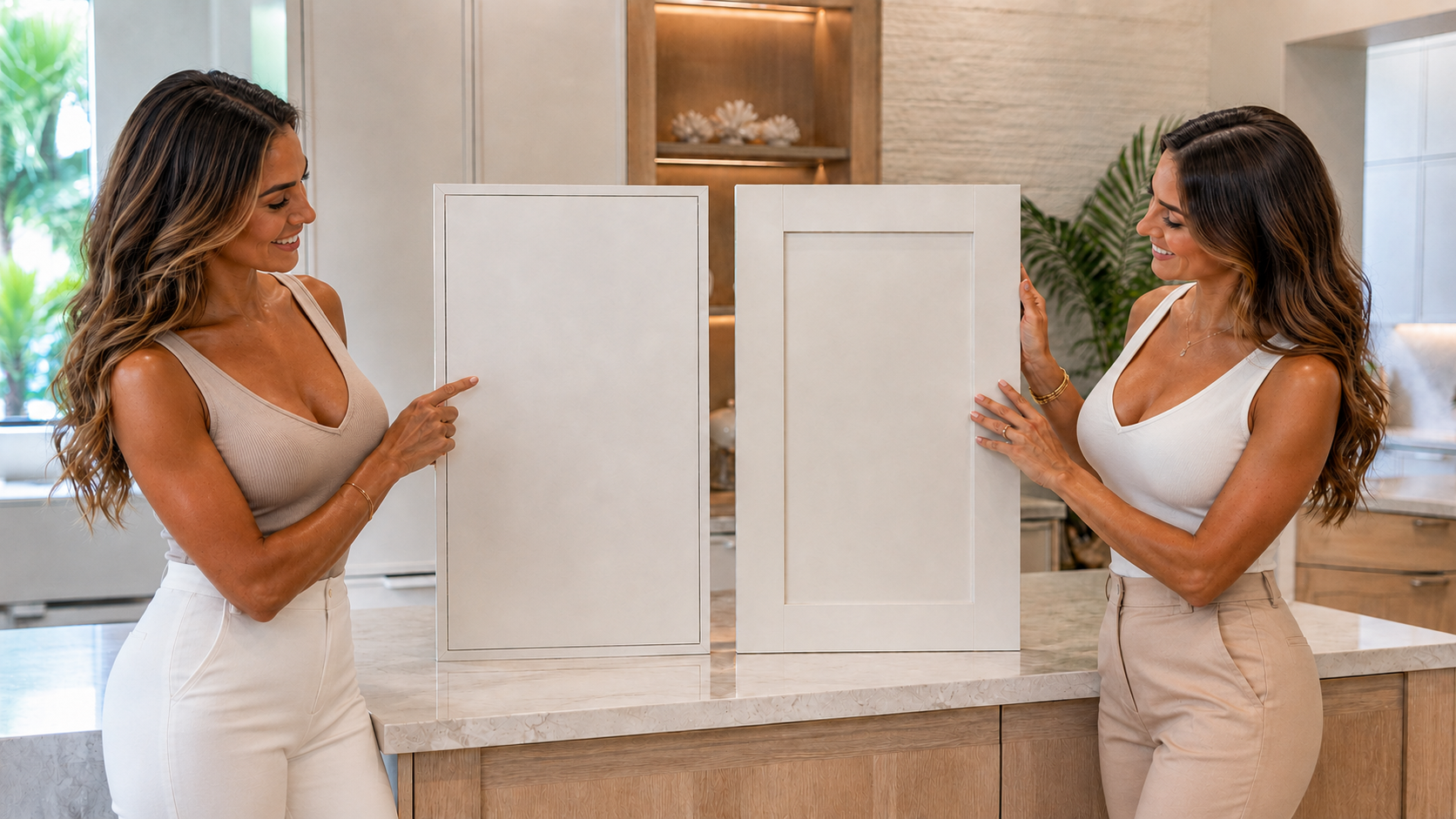
Looking at the door face—not just the entire room—makes the proportion difference much easier to understand.

Standard Shaker
Wider rails and stiles give the doors a stronger framed appearance. The profile feels established, balanced, and adaptable across many home styles.
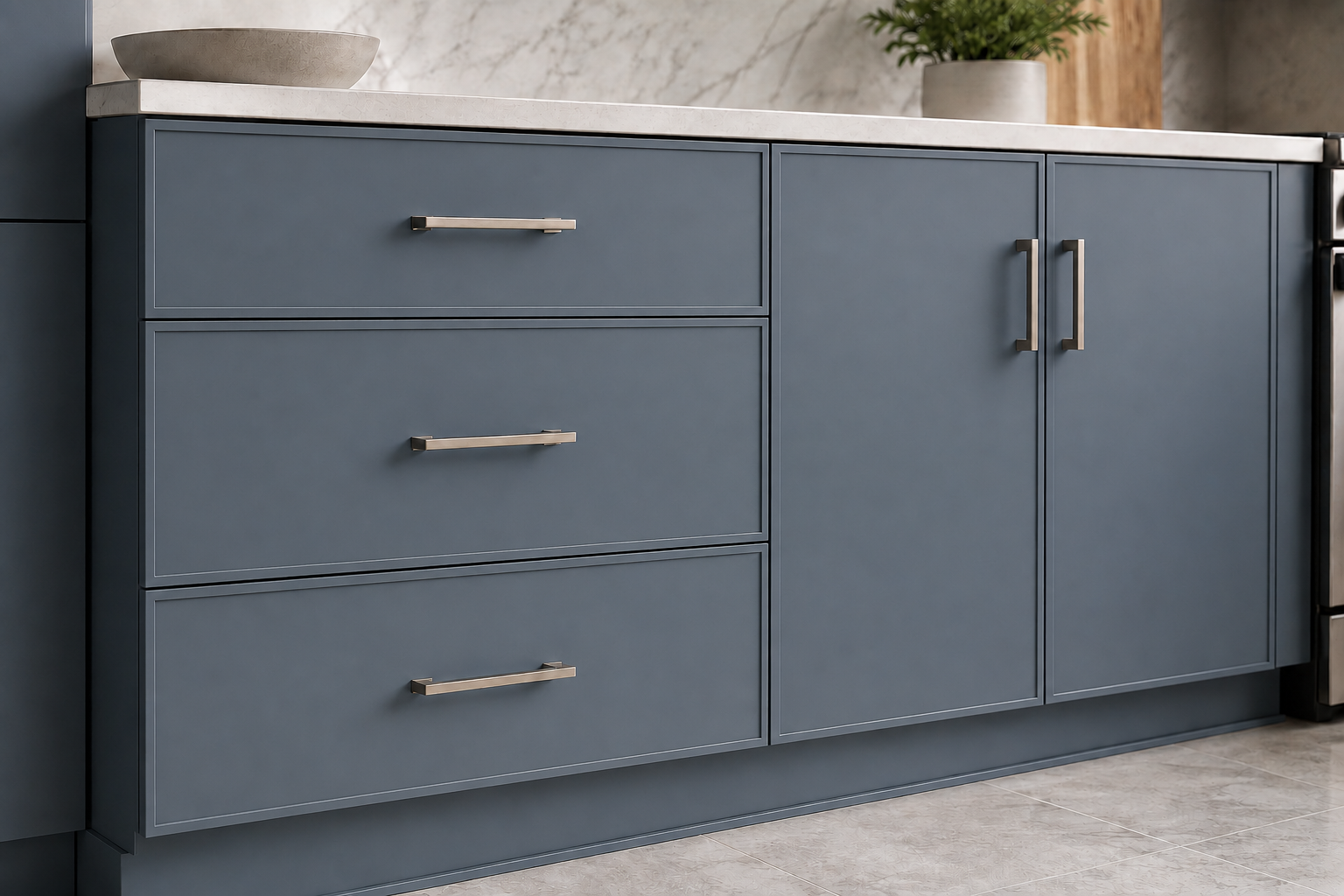
MDI Slim Shaker
The narrow 3/4-inch face profile retains the recessed-panel Shaker character while creating cleaner, lighter lines. It is full overlay—not inset and not a routed slab door.
What Both Shaker Styles Have in Common
- A framed cabinet-door appearance
- A flat recessed center panel
- Clean geometry without heavy ornamentation
- Compatibility with kitchens, vanities, bars, and storage
Which Shaker Style Should You Choose?
Choose Slim Shaker If…
You prefer a modern cabinet face, want the doors to feel visually lighter, or are coordinating the cabinetry with streamlined hardware, large-format surfaces, and restrained architectural details.
Choose Standard Shaker If…
You want a proven profile with more visible framing, need flexibility across traditional and contemporary elements, or prefer cabinetry that carries a little more visual weight.
Room size alone does not make the decision. Finish, hardware scale, crown moulding, light rail, appliance panels, and the proportions of surrounding millwork all affect the final result. For a broader profile breakdown, visit our complete Shaker cabinet styles guide.
Explore MDI Shaker Cabinet Collections
Compare the available profiles, finishes, and cabinet configurations before selecting a collection.
Slim Shaker vs Standard Shaker FAQs
Are slim Shaker cabinets still Shaker cabinets?
Yes. Slim Shaker doors retain the framed appearance and recessed center associated with Shaker design, but use narrower rails and stiles for a more contemporary proportion.
Are MDI Slim Shaker cabinets slab or inset?
No. MDI Slim Shaker cabinetry uses a full-overlay door style with a recessed center and a narrow 3/4-inch face profile. It is not inset cabinetry and it is not a slab door with a decorative groove.
Do slim Shaker cabinets work in small kitchens?
Yes. Their reduced visual weight can help a compact kitchen feel cleaner, but finish, lighting, layout, and hardware also influence how open the room appears.
Is standard Shaker cabinetry outdated?
No. Standard Shaker proportions remain adaptable because they work with modern, transitional, coastal, farmhouse, and traditional design elements.
Can MDI help compare styles before ordering?
Yes. MDI can review the cabinet layout, collection, finish, and project requirements before an order is finalized.
Compare the Cabinetry Before You Order
Explore every collection or send MDI your measurements and project details for layout and ordering guidance.