







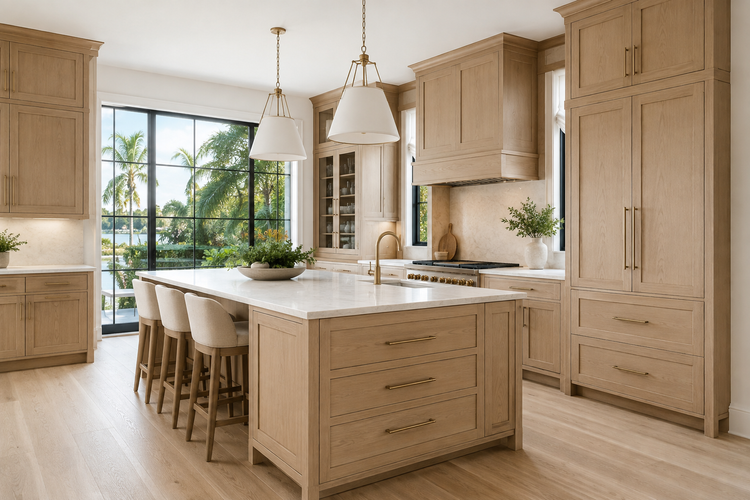
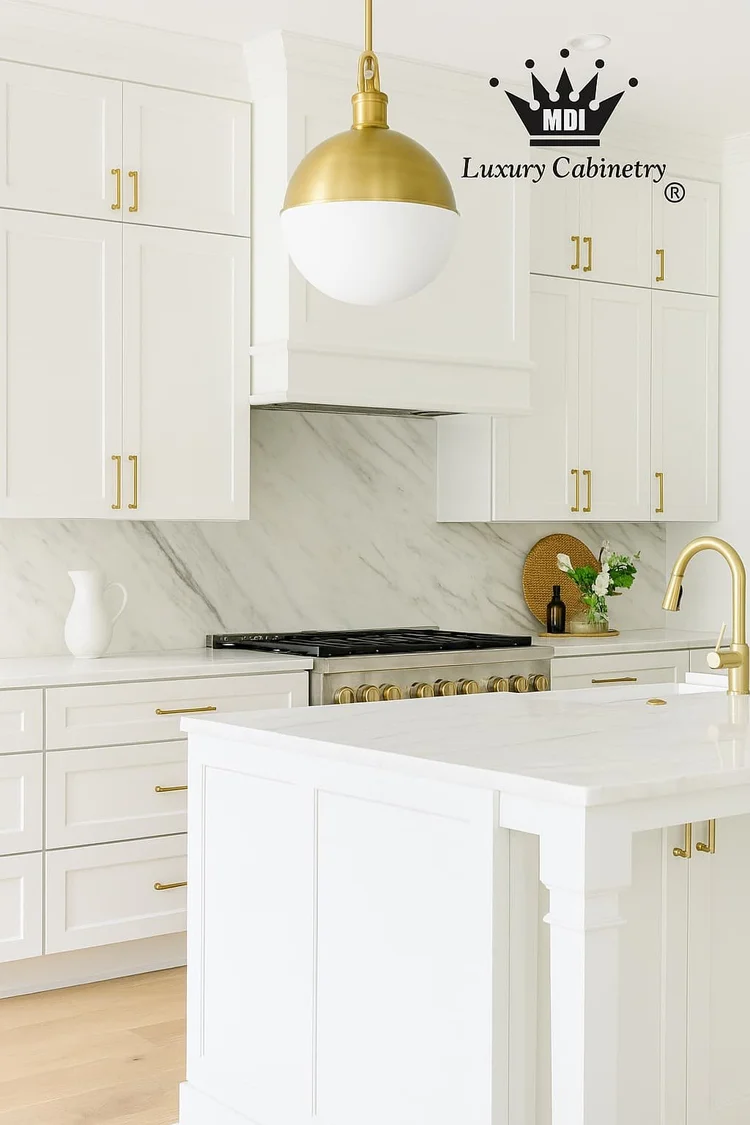

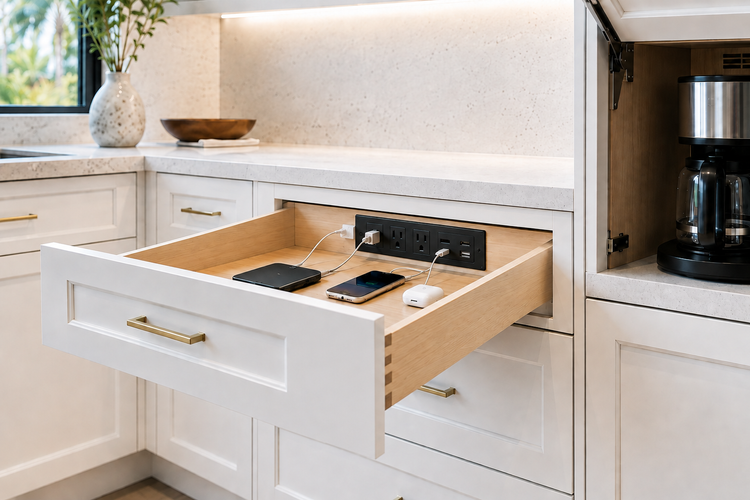


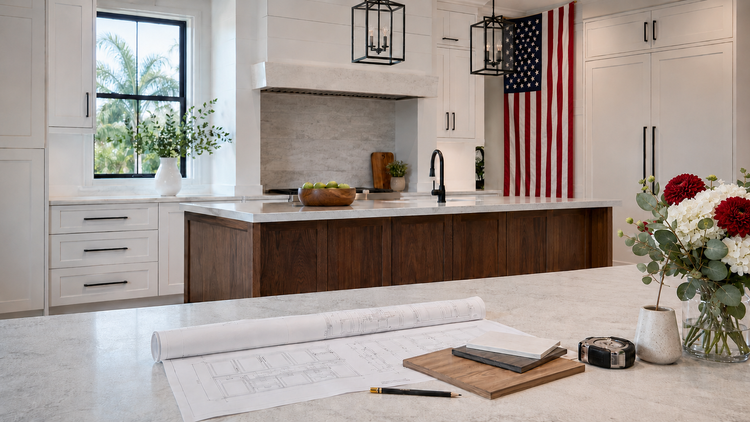





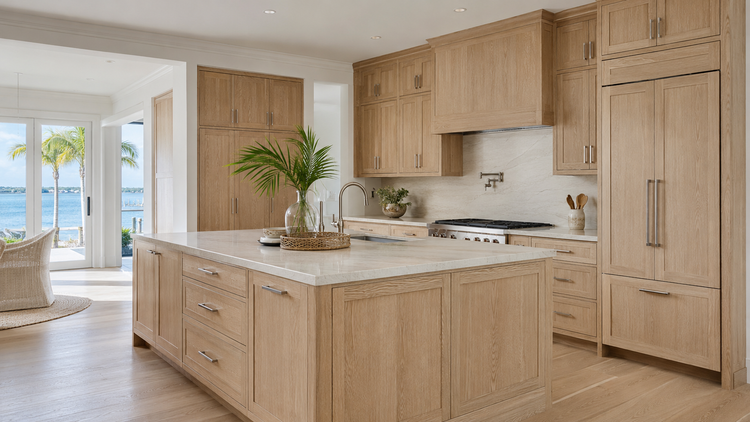
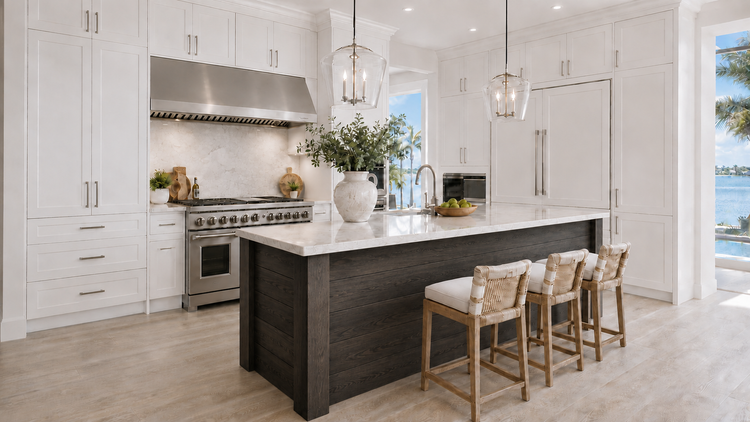
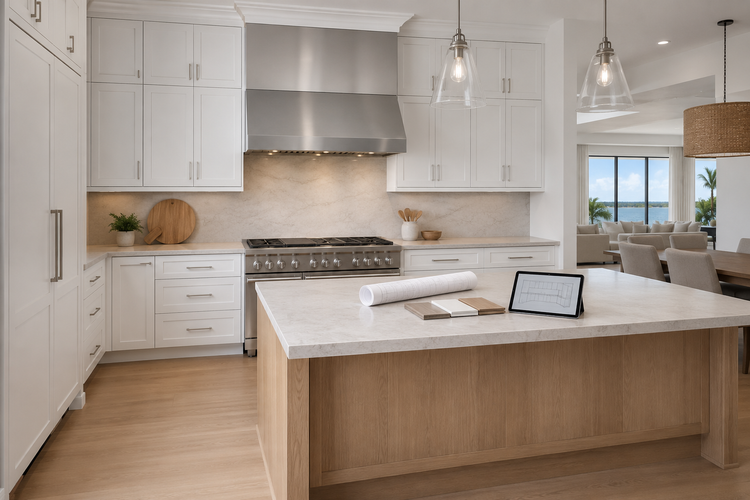

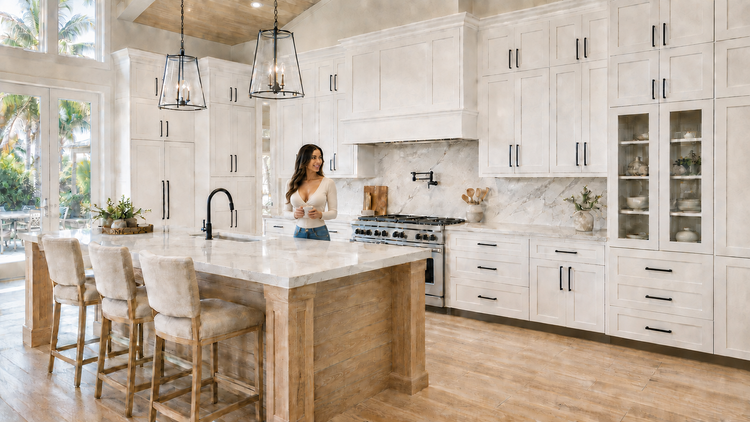

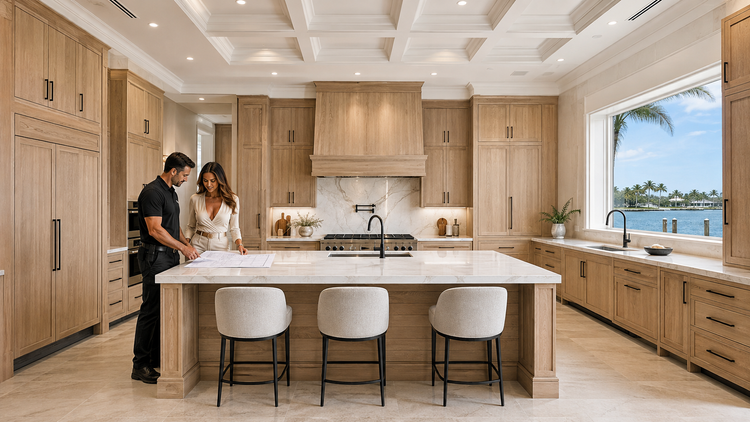


































Luxury cabinet installation is where a strong design either becomes a polished, built-in feature or begins showing preventable problems. In Pinellas County homes, accurate measurements, level cabinet runs, planned fillers, consistent reveals, proper fastening, and carefully adjusted hardware are essential to achieving a finished kitchen that looks intentional.
What defines a quality cabinet installation?
- Cabinet runs are level, plumb, square, and securely fastened.
- Doors and drawers maintain consistent reveals throughout the room.
- Fillers, end panels, mouldings, appliances, and countertops are planned together.
- Toe kicks remain continuous and properly recessed.
- Hardware is aligned consistently and installed only on operable fronts.
- Final adjustments are completed after cabinets and countertops are in place.
Cabinet installation begins before the cabinets arrive
The best installations start during design. Walls, windows, ceilings, plumbing, electrical locations, appliance specifications, floor conditions, door clearances, and adjacent trim all affect the cabinet layout.
A cabinet plan should account for more than nominal cabinet widths. Installers also need room for fillers, finished panels, door swings, crown moulding, countertop overhangs, appliance ventilation, and the irregular walls commonly found in both older Pinellas County homes and remodeled coastal properties.
MDI Luxury Cabinetry uses project dimensions and design information to help clients plan cabinetry before ordering. Our custom kitchen cabinetry and cabinet collections give homeowners multiple ways to balance design flexibility, construction quality, lead time, and budget.
The cabinet installation process
Verify the room
Confirm wall dimensions, ceiling height, openings, finished flooring, appliance specifications, plumbing, electrical locations, and any changes made after the original design.
Establish level reference lines
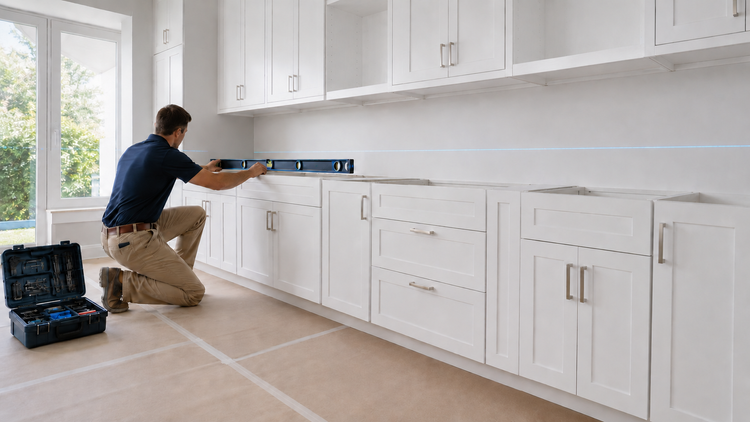
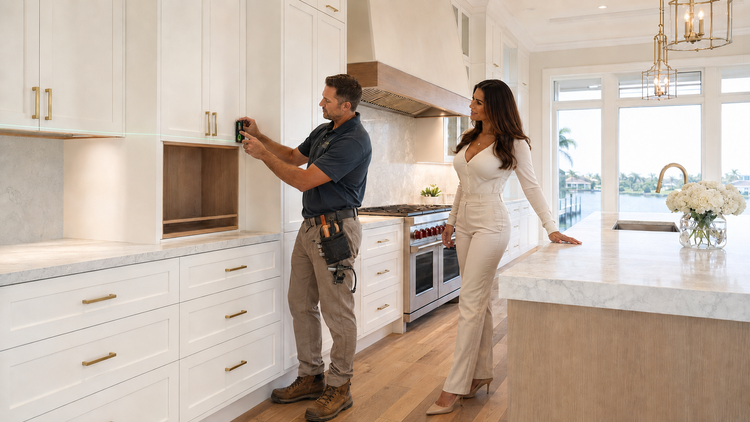
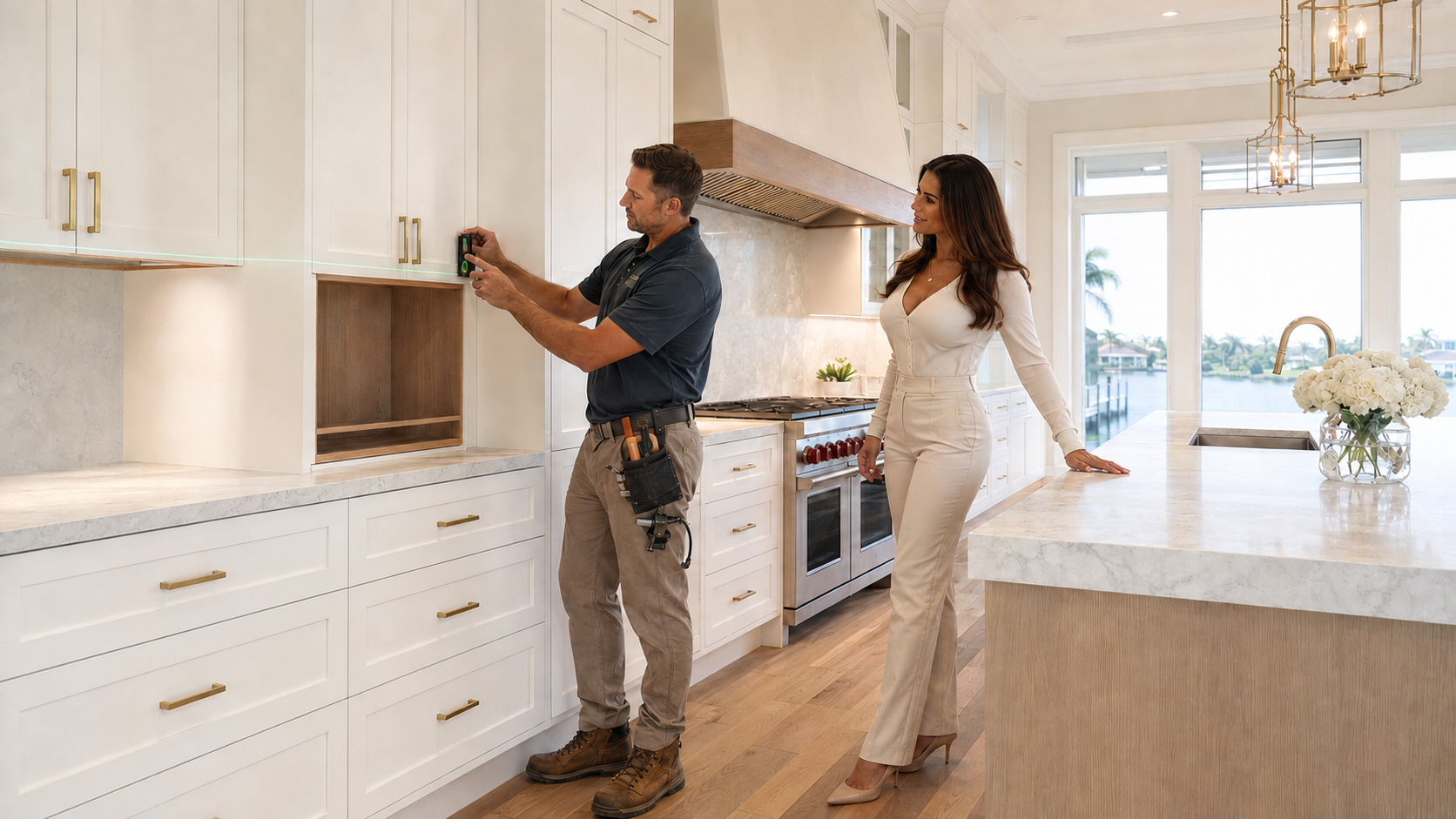
Laser levels help identify high and low floor conditions and establish consistent reference points for base cabinets, wall cabinets, mouldings, and countertops.
Lay out cabinet locations
Cabinet widths, fillers, finished ends, appliance openings, corner clearances, sink placement, and panels are marked before permanent fastening begins.
Set and fasten cabinets
Cabinets are shimmed, clamped, joined, and fastened into appropriate framing while maintaining square boxes, aligned faces, and a level countertop plane.
Fit architectural details
Fillers, finished panels, toe kicks, mouldings, appliance panels, light rails, and decorative components are fitted to the actual room conditions.
Complete final adjustments
Doors, drawers, hinges, slides, and pulls are adjusted after installation so reveals remain balanced and every operable component functions correctly.
Why level, plumb, and square all matter
These terms describe different conditions. A cabinet can be level across the top but still lean forward, sit out of square, or fail to align with the adjoining cabinet.
Level and plumb
Level controls horizontal alignment. Plumb controls vertical alignment. Both affect countertop fit, door movement, moulding transitions, and the appearance of long cabinet runs.
Square and aligned
A square cabinet box allows drawers, doors, slides, and hinges to operate properly. Face alignment keeps separate cabinet boxes reading as one continuous installation.
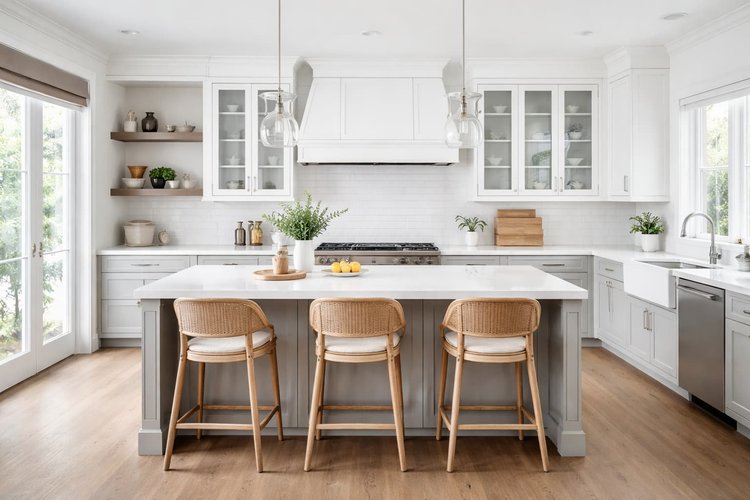
Fillers are part of the design—not wasted space
Fillers create necessary clearance between cabinet doors, walls, appliances, corners, and projecting trim. Removing them simply to gain another inch can leave doors unable to open fully or place hardware against an adjacent wall.
Well-planned fillers also allow an installer to compensate for walls that are not perfectly straight. The filler can be carefully fitted to the wall while the cabinet itself remains square.
Full-overlay cabinetry demands accurate reveals
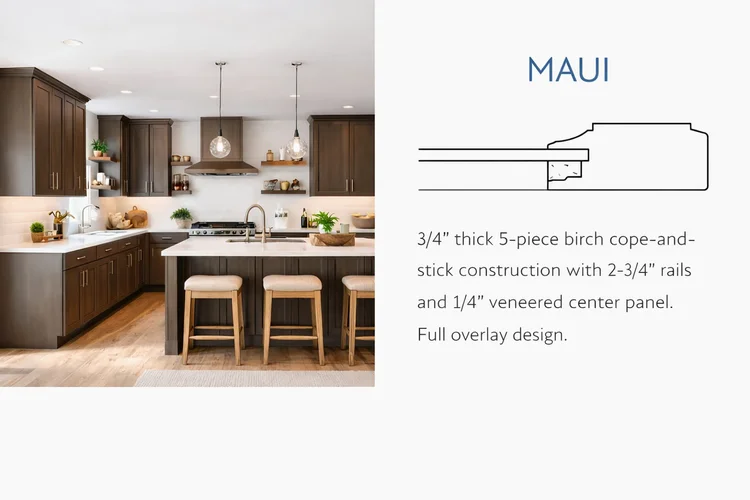
Full-overlay cabinetry leaves narrow spaces between doors and drawer fronts. Small installation errors therefore become more visible than they would on cabinetry with wider face-frame exposure.
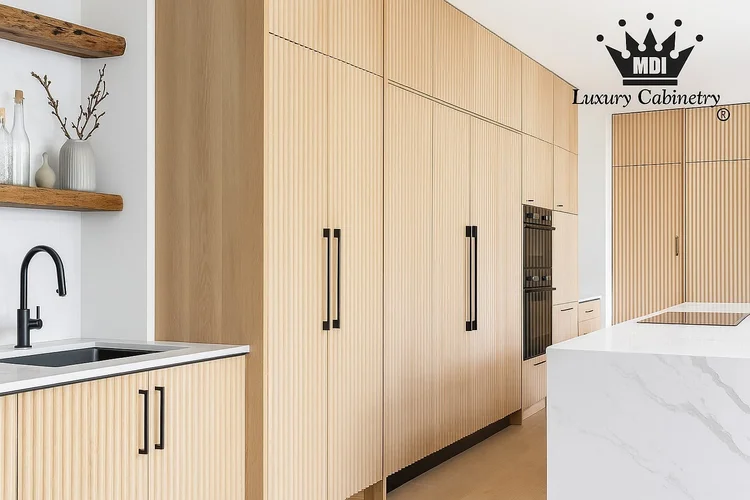
Consistent reveals depend on square cabinet boxes, correct hinge adjustment, properly positioned drawer fronts, and an installation that does not twist the cabinet. Hardware should be placed consistently on every operable front, while decorative fixed panels remain free of unnecessary pulls.
Toe kicks, end panels, and finished sides
A professional base-cabinet installation maintains a continuous recessed toe-kick area rather than leaving random projections, exposed supports, or side pieces extending to the floor. Finished end panels should terminate cleanly and coordinate with the cabinet design without interfering with the functional recess.
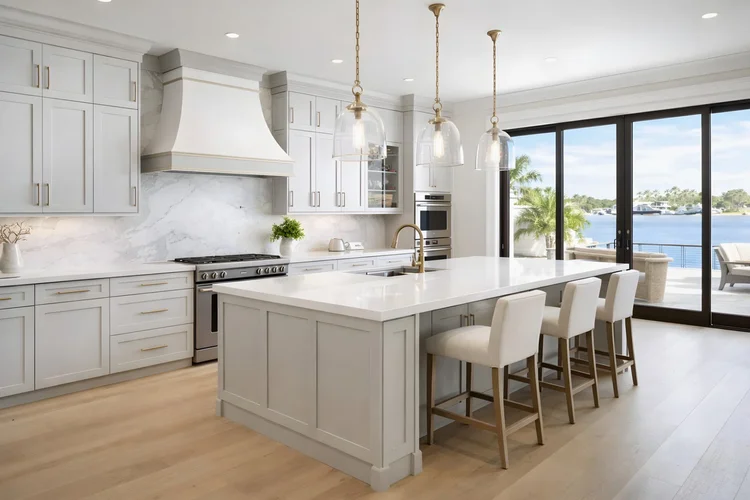
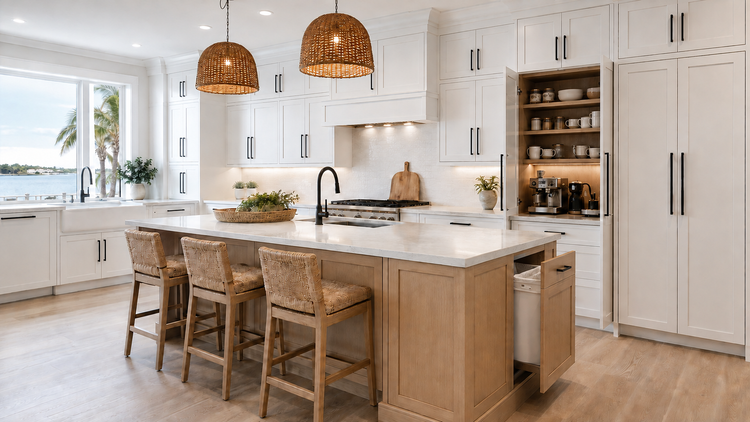
Islands and peninsulas require the same planning. Seating sides and decorative ends should be intentionally finished for their actual function. False drawers and unnecessary hardware can make a high-end island look less believable instead of more detailed.
Installation considerations for Pinellas County homes
Pinellas County includes older block homes, waterfront residences, condominiums, remodeled mid-century properties, and newer coastal construction. Each building type presents different installation conditions.
Older homes
Walls, floors, and ceilings may vary considerably. Installers may need carefully fitted fillers, additional backing, corrected framing, or coordinated wall preparation before cabinetry is installed.
Condos and coastal properties
Delivery access, work-hour restrictions, elevators, building protection, humidity, appliance ventilation, and association requirements may affect scheduling and installation planning.
Cabinetry and installation should be coordinated
Cabinet selection and installation are connected, but they are not always provided by the same business. Confirm who is responsible for field measurements, final cabinet specifications, delivery inspection, installation, trade coordination, countertops, appliance installation, and warranty adjustments before ordering.
MDI Luxury Cabinetry supplies RTA, semi-custom, and custom cabinetry. Installation may be completed as a DIY project, by your chosen qualified contractor, or through MDI Custom Homes where the project and service area are appropriate.
Final cabinet-installation checklist
- Cabinet layout matches the approved design.
- Appliance openings match manufacturer specifications.
- Base cabinets create a level countertop plane.
- Wall cabinets are level, plumb, secure, and properly aligned.
- Doors and drawers open without contacting walls or appliances.
- Fillers and finished panels fit cleanly.
- Toe kicks are continuous and consistently recessed.
- Door and drawer reveals are balanced.
- Pulls are aligned and installed only on functional fronts.
- All doors, drawers, hinges, and slides operate correctly.
Plan the cabinetry before scheduling installation
Installation quality cannot completely correct a poorly planned cabinet order. The most reliable process combines accurate field information, a practical cabinet layout, properly specified fillers and panels, confirmed appliances, and an installer who understands how every part of the room must come together.
Homeowners comparing cabinet styles can begin with the cabinet buying guide, review our cabinet construction information, or explore options for ordering cabinets online.
Cabinet installation questions
Should cabinets be installed before countertops?
Yes. Base cabinets are normally installed, leveled, secured, and checked before the countertop is field-measured or templated. This helps the countertop fabricator work from the completed cabinet layout.
Why are cabinet fillers necessary?
Fillers provide door and drawer clearance, accommodate uneven walls, protect hardware from adjacent surfaces, and create clean transitions around appliances, corners, and architectural trim.
Can cabinets be installed over finished flooring?
Installation sequencing depends on the flooring material, manufacturer requirements, project design, and remodeling scope. Floating floors generally should not be trapped beneath fixed cabinetry, while other finished flooring systems may extend under cabinets.
Who can install cabinetry purchased from MDI Luxury Cabinetry?
Cabinetry may be installed as a DIY project, by a qualified contractor selected by the homeowner, or by MDI Custom Homes when the project scope and service area are appropriate.
What causes uneven cabinet-door gaps?
Uneven reveals may result from an out-of-square cabinet, installation movement, hinge adjustment, incorrectly positioned fronts, or adjoining cabinets that were not aligned before fastening.
Start with a cabinet plan built for your home
Explore premium cabinetry, request design assistance, and coordinate the details that help your Pinellas County kitchen look intentional from the first cabinet to the final adjustment.
MDI Luxury Cabinetry sells cabinetry online and provides custom cabinetry design services. Installation may be completed as a DIY project, by MDI Custom Homes where available, or by your chosen qualified contractor.