

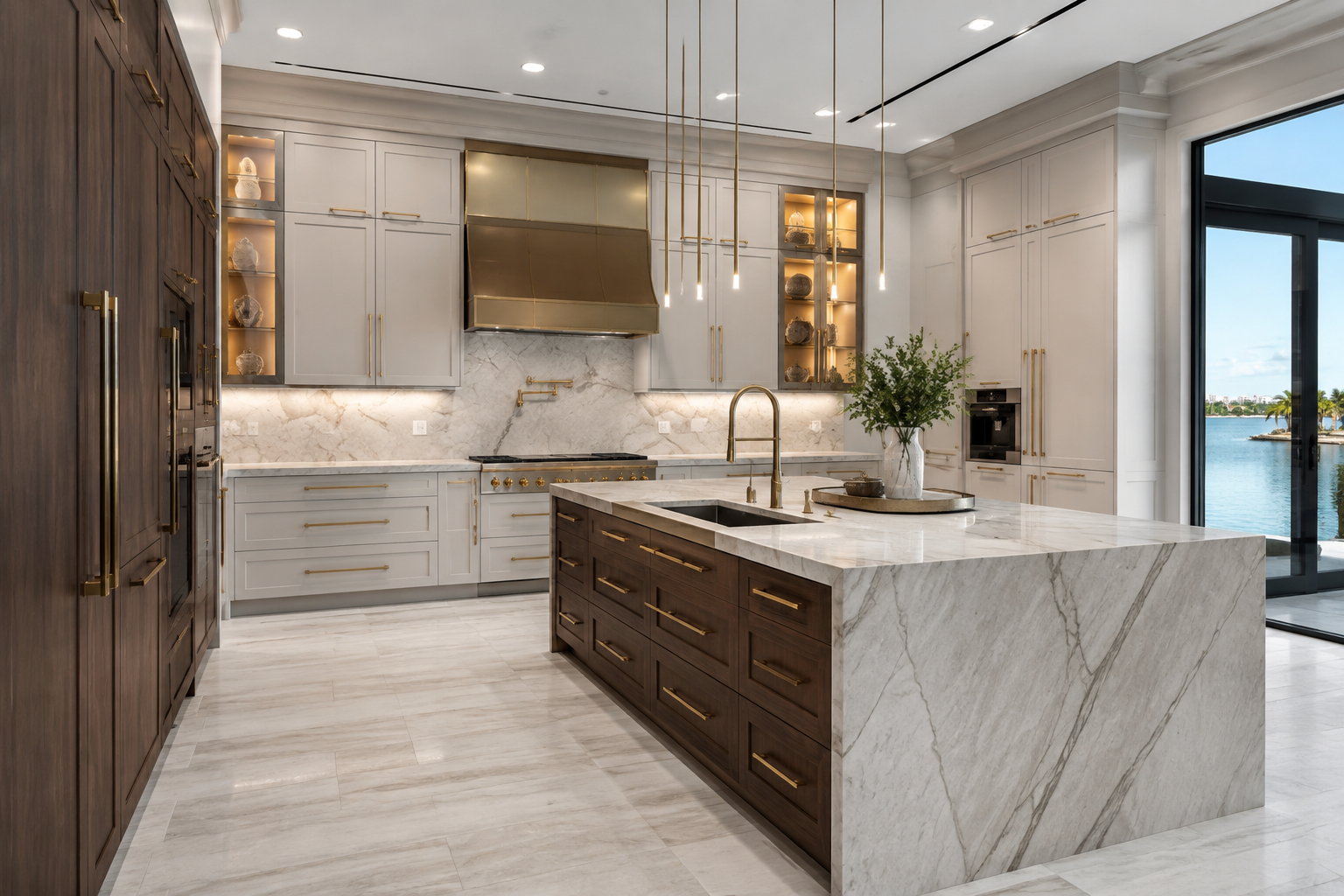
Cabinetry Guides & Expert Resources
Better Information.
Better Cabinet Decisions.
Practical guidance on cabinet construction, door styles, layouts, ordering, installation realities, custom design, and the details that determine how a finished kitchen performs.
Experience-Based Cabinetry Education
Answers Grounded in How Cabinets Are Actually Built and Installed.
Cabinet decisions affect far more than color. Box construction, door profiles, overlays, fillers, panels, hardware, appliance clearances, room conditions, freight, assembly, and installation all influence the final result.
MDI's resource center helps homeowners compare options, understand specifications, prepare better layouts, and approach online cabinet ordering with fewer surprises.
Start With These Guides
Featured Cabinetry Resources.
These articles answer the questions customers most often face before selecting a collection, approving a layout, or placing an order.
Slim Shaker vs. Traditional Shaker
Compare rail widths, visual weight, design character, and the rooms where each shaker profile works best.
Read the Comparison → Technical SpecificationsHow Maui Cabinets Are Built
Review door construction, plywood cabinet boxes, full-overlay design, dovetail drawers, and undermount hardware.
Review Construction → Design DetailsWhy Some Kitchens Look Custom
Learn how proportions, fillers, panels, moldings, alignment, and transitions separate a designed kitchen from installed boxes.
See What Makes the Difference → Collection GuideChoose the Right Cabinet Collection
Compare style, construction, finish direction, flexibility, project needs, and the best route for your home.
Compare Collections → Online OrderingHow to Buy Cabinets Online
Understand measurements, design support, order review, freight delivery, assembly, and planning before purchase.
Read the Buying Guide → RTA CabinetsAre RTA Cabinets Worth It?
Evaluate quality, construction, value, shipping, assembly, installation, and when RTA cabinetry makes sense.
Explore the Answer →Ready to Move From Research to a Project?
Choose Your Next Step.
Shop Cabinet Collections
Compare Catalina, Slim Shaker, Maui, Simple Shaker, and Escada door styles and finishes.
Explore Collections →Get Layout & Design Help
Turn measurements and ideas into a coordinated cabinet plan before ordering.
Explore 3D Design →Discuss a Custom Project
Plan custom kitchens, closets, vanities, built-ins, and qualifying Florida cabinetry projects.
Contact MDI →Complete Evergreen Article Directory
Browse All 80 Cabinetry Articles.
Every current MDI cabinetry article is linked below so visitors and search engines can reach the complete resource library without depending on pagination or search.
Open the Complete Article Directory
Latest Cabinetry Articles
Continue Into the Full MDI Resource Library.
The live Squarespace blog feed begins directly below this section, with the newest articles first.
↓Find the Cabinetry Answer You Need.
Search all 81 MDI articles or browse by topic. These guides cover cabinet construction, online ordering, custom design, installation, closets, vanities, local projects and the details that shape a successful result.
Featured Guides & New Releases
9 featured articlesBuying Cabinets & RTA Guides
Online ordering and product selectionCabinet Doors, Materials & Construction
Profiles, hardware and technical detailsKitchen Design & Inspiration
Layouts, finishes and architectural ideasCustom Closets & Storage
Organization and built-in storageBathroom Vanities
Vanity design and bathroom storageLocal & Custom Cabinetry
Pinellas County projects and investment guidesProject Planning & Industry Knowledge
Costs, responsibilities and planning realitiesTry a broader term such as “cabinets,” “doors,” “closets,” “installation” or “RTA.”
Ready to Move from Research to a Cabinet Plan?
Send MDI your measurements, appliance information and project goals. Our design team can help you compare collections, review the layout and determine the right cabinetry path.
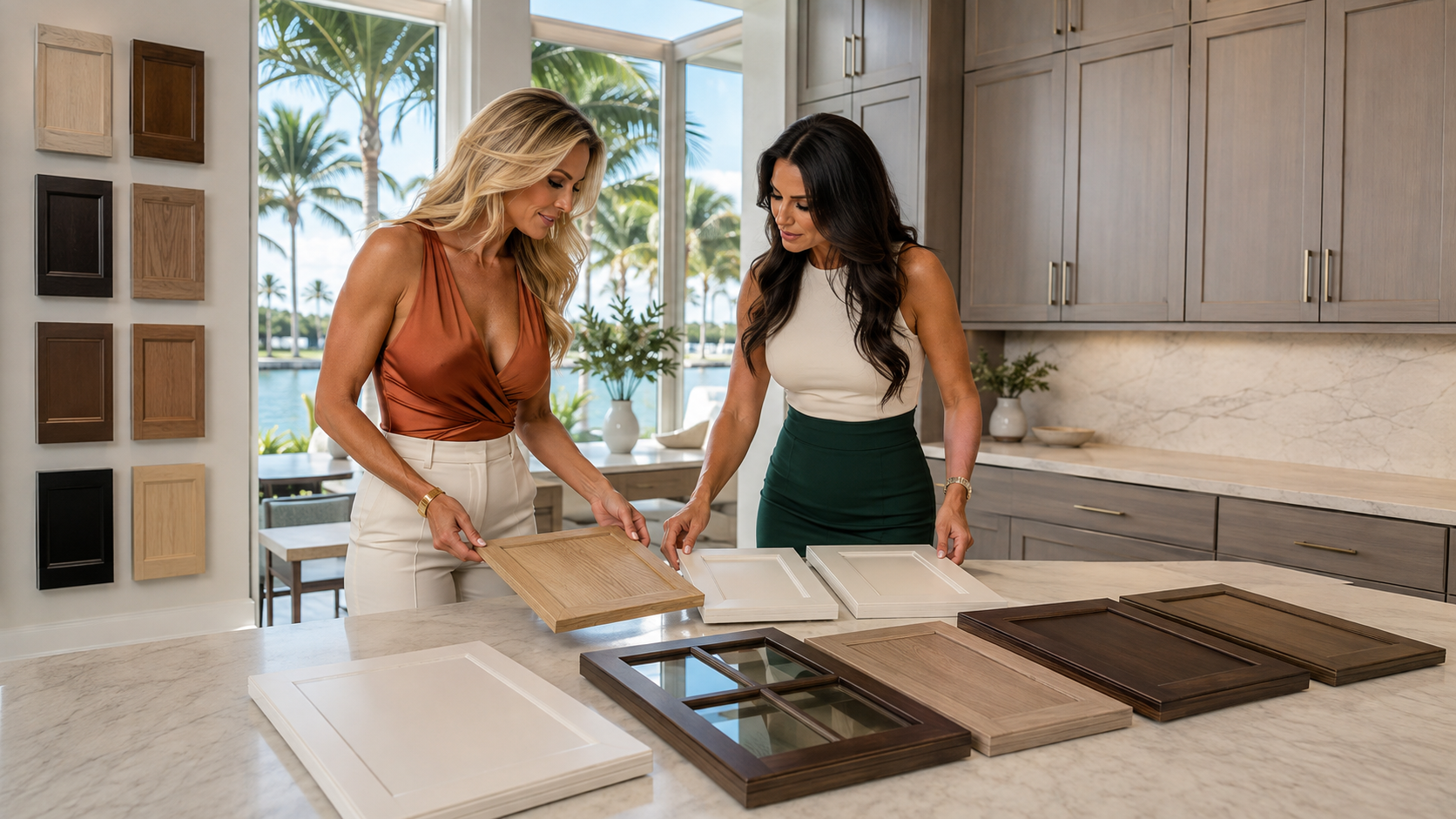
Custom Cabinet Door Styles for Pinellas County Homes
Explore custom cabinet-door profiles, rail widths, center panels, applied moulding, glass preparation, wood species and finishes for your Pinellas County home.

Custom cabinet doors provide more than additional colors. They allow the proportions, profiles, center panels, wood species and details to be tailored to the architecture of the room. The goal is not to make every door elaborate—it is to create a cabinet elevation that could not have been achieved by selecting the nearest standard option.
What Makes a Cabinet Door Custom?
A standard cabinet collection offers predetermined door profiles, finishes and sizes. Custom cabinetry provides greater control over the visual and structural details of the door.
Rail and stile width
Narrow rails create a lighter contemporary door, while wider rails produce stronger framing and a more traditional presence.
Inside-edge profile
The transition from the frame to the center panel can be square, beveled or moulded, changing how the door captures light and shadow.
Center-panel construction
Recessed, raised, flat and glass-ready center sections allow the same cabinet layout to support very different architecture.
Wood species
White oak, maple, walnut and other materials influence grain, color movement, finishing and the overall personality of the room.
Applied moulding
A secondary moulding can add furniture-like depth to selected door profiles without overwhelming the entire kitchen.
Matching drawer fronts
Drawer fronts can be designed to coordinate with doors so the kitchen reads as a complete custom elevation instead of mixed components.
Custom Shaker Doors
Shaker doors appear simple, but their proportions have a major effect on the finished room. A traditional Shaker door uses wider rails and stiles around a recessed center panel. Slim Shaker doors reduce that frame to create a lighter, more architectural appearance.
MDI’s flagship Slim Shaker profile uses rails approximately ¾ inch wide on all four sides. When custom sizing is used, rail proportions should remain visually balanced across narrow doors, wide doors and drawer fronts.
Review the broader comparison in our guide to cabinet-door styles for Pinellas County homes.
Raised-Panel and Applied-Moulding Doors
Raised center panels introduce depth and furniture-like character. They work best when the kitchen’s crown, end panels, hood and other architectural details support the additional profile.
Applied moulding adds another level of refinement around the center panel. It can be used throughout a formal kitchen or selectively on a hood, island, bar or furniture-style cabinet.
Custom detail does not mean covering every surface with moulding. Restraint keeps the focal points clear and prevents a large room from feeling visually crowded.
Glass-Ready Custom Doors
Glass-front doors can reduce the visual weight of tall cabinetry and create illuminated display areas. A custom glass frame can coordinate with the solid cabinet doors while accounting for the required glass thickness and retention method.
Possible glass treatments include:
- Clear glass for open display
- Seedy or textured glass for softer visibility
- Fluted glass for vertical detail
- Smoked glass for contemporary cabinetry
- Mirrored backs to increase reflected light
Interior finish and shelving must also be designed because the cabinet interior becomes visible. Lighting should be integrated before the cabinetry is built.
Paint-Grade and Stain-Grade Doors
Paint-grade doors emphasize geometry and profile. Stain-grade doors emphasize grain, board selection and natural variation. The construction should be selected for the intended finish rather than choosing a material first and forcing it into the wrong application.
Natural wood can vary significantly in color and grain. That movement is part of the material and should be considered when approving a custom stain-grade kitchen.
Explore species and finishing considerations in our wood cabinet-door guide.
*NCO products with natural White Oak, may contain color streaks, spots and color variation from almost white to very dark, is not considered as a defect. No backcharges will be accepted for allowable characteristics in natural White Oak. To avoid these noticeable color and grain variations, please select painted products.*
Door Thickness and Construction
Many premium cabinet doors are approximately ¾ inch thick. Thickness should be coordinated with the hinges, overlay, profile and door dimensions. A thicker appearance is not automatically better if it interferes with operation or creates unnecessarily heavy proportions.
Traditional five-piece doors use two vertical stiles, two horizontal rails and a center panel. This construction allows the frame and panel to respond more appropriately to seasonal environmental changes than a single wide piece of solid lumber.
Full-Overlay Cabinetry Only
MDI cabinetry uses full-overlay construction. Doors and drawer fronts cover nearly the entire cabinet face, leaving narrow, consistent reveals. Full overlay can support contemporary, transitional and traditional custom door profiles.
Custom Drawer Fronts Matter
A custom door loses much of its effect when paired with unrelated slab drawer fronts. Drawer fronts should coordinate with the doors whenever the available height allows the profile to remain properly proportioned.
A wide drawer may use a five-piece profiled front, while a shallow drawer may require a carefully designed reduced profile. The entire elevation should be reviewed together before production.
Hardware Must Fit the Custom Profile
Hardware placement should be resolved with the actual door sample. A pull must fit the rail, provide comfortable access and remain consistent across doors and drawers.
Every operable door and drawer needs accessible hardware. Fixed decorative panels should remain free of unnecessary pulls. MDI commonly coordinates cabinetry with current square bar hardware such as the Stanton series by Elements.
Matching Custom Doors to the Architecture
Coastal-modern homes
Slim Shaker or restrained slab doors work well with large windows, pale stone and natural white oak. Narrow profiles prevent full-height cabinetry from becoming visually heavy.
Transitional homes
Traditional Shaker, refined inside-edge profiles and selective applied moulding can bridge clean planning with architectural detail.
Traditional homes
Raised panels and detailed moulding can coordinate with substantial crown, decorative hoods and furniture-style cabinetry.
Contemporary homes
Slab doors, narrow profiles and carefully matched wood grain can create highly controlled cabinet elevations with minimal visual interruption.
How to Develop a Custom Cabinet Door
- Define the architectural direction. Begin with the home and room—not a door viewed by itself.
- Select paint-grade or stain-grade construction. The intended finish affects the correct material.
- Choose rail and stile proportions. Review how they appear on tall, narrow and wide doors.
- Select the center panel and inside profile. Control how much shadow and detail the door creates.
- Coordinate drawer fronts. Make sure doors and drawers form one complete elevation.
- Test the hardware. Confirm the pull fits comfortably on the selected rail.
- Review full-size samples vertically. A door lying flat does not receive light like an installed door.
- Approve the complete 3D design. Confirm how the profile works across the entire room before production.
Custom Doors Are Part of a Complete Cabinet System
The door is the most visible part of the cabinetry, but it is not the entire cabinet. Box construction, shelves, drawers, hinges, slides, finished ends and installation details determine how the kitchen performs.
Review our cabinet construction guide before comparing cabinetry based on door appearance alone.
MDI Custom Cabinetry and MDI Luxury Cabinetry
MDI offers two distinct hand-built product lines:
- MDI Custom Cabinetry provides hand-built custom cabinetry comparable to reputable custom cabinet builders throughout the area.
- MDI Luxury Cabinetry is our top-tier line with our most exquisite finishes and features, 12¼-inch-deep upper cabinets and the trademarked MDI crown laser-engraved into its premium drawer boxes.
There is no product called “MDI Luxury Custom Cabinetry.” MDI Custom Cabinetry and MDI Luxury Cabinetry are separate lines.
Custom Cabinet-Door Questions
Can the rail width of a custom Shaker door be changed?
Yes. Rail and stile width can be selected to create traditional or contemporary proportions, provided the design remains structurally appropriate for the door dimensions.
Are custom cabinet doors always made from solid wood?
No. Material selection depends on the door style and finish. Five-piece doors may combine solid-wood rails and stiles with a stable center panel designed for paint or stain.
Can custom doors include glass?
Yes. Custom glass-ready doors can be designed for clear, textured, fluted or smoked glass, with coordinated interiors and lighting.
Should custom drawer fronts match the doors?
In most profiled cabinetry, coordinating drawer fronts create the strongest custom appearance. The profile may need to be adjusted for shallow drawer heights.
Does MDI offer custom inset cabinet doors?
No. MDI cabinetry uses full-overlay construction. Customization applies to the door profile, proportions, materials, finishes and related design details.
Develop a Door Style for Your Home
Compare full-size profiles, wood species, painted finishes and hardware with MDI Luxury Cabinetry. We will help you create a coordinated custom cabinet design for your Pinellas County home.